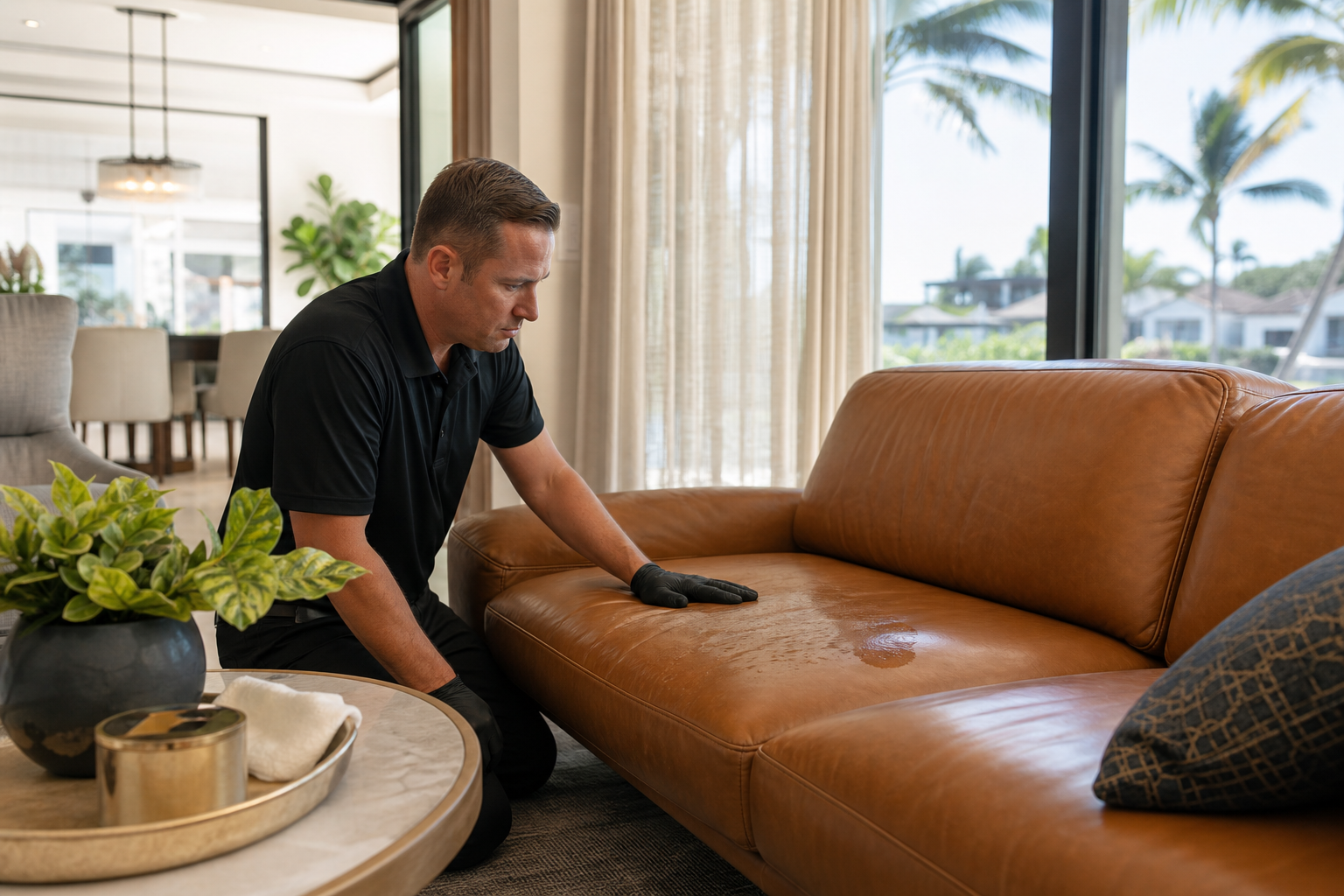
Oil-based household cleaners are often used on wood, stainless steel, vinyl, and other surfaces because they can loosen grime and leave behind a polished appearance. Leather, however, requires a more careful approach. Applying an oil-based household cleaner to a leather sofa, chair, vehicle interior, boat seat, or other leather surface may create problems that are not immediately visible.
Oils can migrate into leather, collect dust, alter the appearance of the finish, and interfere with future cleaning or restoration. In some cases, a product may cause dark spots, uneven sheen, stickiness, discoloration, or a greasy surface that attracts additional soil. These risks are especially important in Southwest Florida, where heat, humidity, strong sunlight, sunscreen, body oils, and salt air can accelerate surface contamination.
This guide explains why oil-based household cleaners can be risky for leather, how to identify possible damage, what to do after an accidental application, and when professional leather cleaning or restoration is appropriate.
What Are Oil-Based Household Cleaners?
Oil-based household cleaners contain oils, solvents, waxes, or other ingredients designed to dissolve grime, add shine, or condition certain non-leather surfaces. Common examples may include furniture polish, multipurpose oil sprays, mineral-oil products, silicone-based shine products, and cleaners intended for wood or finished household materials.
Some products are marketed as polishes or conditioners and may appear suitable for anything that looks smooth. That does not make them appropriate for leather. Leather is a natural material with a specific surface finish, and different leather types respond differently to moisture, solvents, oils, friction, and heat.
A protected or pigmented leather surface may resist immediate absorption, while an aniline, nubuck, suede, or unfinished leather can react much more quickly. Before using any product, the leather type and finish should be identified.
Why Oil-Based Household Cleaners Can Damage Leather
They can leave a greasy residue
An oil-based product may not fully absorb or evaporate from the leather surface. Instead, it can leave a film that feels slick, tacky, or unusually soft. This residue can attract airborne dust and household soil, causing the surface to become dirty again more quickly.
On frequently used furniture, the residue may combine with perspiration, body oils, food particles, and fabric transfer. Over time, what began as a thin layer of polish can become a dull or sticky buildup that is difficult to remove without affecting the finish underneath.
They can darken leather unevenly
Oil may temporarily deepen the color of leather and make it appear richer. That change is not always a sign of improvement. Uneven absorption can create dark patches, tide marks, or a blotchy appearance, especially on lighter leather or surfaces with worn finish.
Heat can make this effect more noticeable. A leather car interior parked in direct Florida sun, a boat seat exposed to warm conditions, or a chair near a sunny window may react differently than a piece kept in a cooler, shaded room.
They may interfere with the existing finish
Many modern leather surfaces have a protective topcoat. This finish helps control color, sheen, stain resistance, and surface feel. Oil-based products can make that finish look cloudy, overly shiny, slippery, or inconsistent.
Once a foreign product is applied, later cleaning, color restoration, repair, or refinishing may require additional preparation. A professional may need to remove residue carefully before determining whether the original finish has been affected.
They can encourage transfer and staining
A soft or oily residue can transfer to clothing, cushions, walls, and other nearby materials. Light-colored garments may show discoloration after contact with treated leather. On furniture, the residue can also move into seams, piping, perforations, and textured grain.
Oil can be particularly difficult to manage on porous or absorbent leather. Scrubbing aggressively to remove it may create a second problem by wearing the finish or producing a lighter, rougher area.
They may mask existing damage
Polishing products can temporarily hide dryness, fading, scuffs, or uneven color by making the surface look darker or glossier. This visual improvement may be short-lived and can make it harder to evaluate the true condition of the leather.
Leather care should preserve the material rather than simply cover a problem. If the leather has fading, cracking, abrasion, or finish loss, it may need a tailored restoration approach instead of another topical product.
Oil-Based Cleaners Are Not the Same as Leather Conditioners
A household oil product and a professional leather conditioner are not interchangeable. A leather conditioner is formulated for a particular leather surface and should be selected based on the material, finish, age, and condition of the item.
Conditioning is also separate from cleaning. Cleaning addresses soil, oils, and surface contamination. Conditioning may support the feel and flexibility of an appropriate leather surface after cleaning, but it cannot safely replace cleaning or repair. Applying conditioner over dirt, sunscreen, or household residue can trap contamination and produce an uneven result.
For more guidance, see why leather cleaning and conditioning are two different steps.
Leather Types That Require Extra Caution
Pigmented or protected leather
Pigmented leather has a surface coating that provides much of its color and protection. Oil-based household cleaners may sit on top of this finish, leaving shine, residue, or a slippery feel. Although protected leather is generally more resistant to everyday contamination than unfinished leather, it still should not be treated with products intended for other materials.
Learn more about identifying and caring for pigmented or protected leather.
Aniline and semi-aniline leather
Aniline leather has little or no heavy surface pigment, allowing its natural grain and character to remain visible. It can absorb oils and liquids more readily than a heavily protected leather. A household polish may cause darkening, staining, or a change in surface feel that is difficult to reverse.
Nubuck and suede
Nubuck and suede have a textured, napped surface that should not be flattened or coated with ordinary oils. An oil-based product can mat the nap, create dark marks, and change the tactile character of the material. These surfaces require specialized identification and cleaning methods.
Automotive, marine, and aviation leather
Leather in vehicles, boats, and aircraft is exposed to distinct conditions. Automotive interiors may collect sunscreen, perspiration, denim dye, and heat-related residue. Marine seating can encounter saltwater, humidity, spray, and prolonged sun exposure. Aviation interiors may have specialized finishes and high expectations for appearance and cleanliness.
In each application, an oil-based household cleaner may create a finish problem rather than solve one. Product selection should account for both the leather and the environment in which it is used.
What to Do If You Used an Oil-Based Cleaner on Leather
- Stop applying the product. Do not add more polish, water, conditioner, or solvent in an attempt to balance the appearance.
- Blot excess residue gently. Use a clean, dry, white microfiber cloth and light pressure. Avoid rubbing, especially on textured, delicate, or unfinished leather.
- Do not use heat. Hair dryers, heat guns, and direct sunlight can accelerate uneven drying and may worsen darkening or finish changes.
- Check for transfer. Look for oil on clothing, cushions, seams, or nearby surfaces. Avoid sitting on or using the item until the surface has been evaluated if it remains greasy.
- Document the product. Keep the container or photograph the label. Ingredient information can help a leather professional determine the safest next step.
- Arrange an evaluation if the appearance or feel has changed. Professional assessment is especially important when the leather is valuable, light-colored, unfinished, antique, exotic, or part of a vehicle, boat, aircraft, or commercial installation.
Avoid household degreasers, rubbing alcohol, acetone, abrasive sponges, and aggressive scrubbing unless a qualified professional has specifically recommended a method for that leather. A strong solvent may remove the oil while also removing color or damaging the protective finish.
How to Choose a Safer Leather-Care Product
When shopping for leather care products, consider the following:
- Confirm that the product is made for leather. A product designed for wood, vinyl, plastic, or stainless steel should not be assumed safe for leather.
- Identify the leather finish first. The correct approach for protected upholstery may not be suitable for aniline, nubuck, suede, or specialty leather.
- Read the directions and limitations. Look for guidance about colorfastness, testing, ventilation, and surfaces that should be avoided.
- Test discreetly. A hidden test can reveal color transfer or finish changes, but it does not guarantee that the product is suitable for the entire item.
- Use less product than you think you need. Excess moisture, oil, or conditioner can create residue and uneven results.
- Be cautious with products promising instant shine. A glossy appearance may come from a surface film rather than improved leather condition.
For valuable leather or uncertain materials, professional guidance is often more practical than experimenting with multiple products. Correct identification can prevent avoidable damage.
Southwest Florida Considerations for Leather Care
Leather in Fort Myers, Cape Coral, Naples, Bonita Springs, Estero, Marco Island, Sanibel, Captiva, Port Charlotte, Punta Gorda, Lehigh Acres, and nearby communities may be exposed to conditions that make residue and contamination more noticeable.
High heat can soften surface deposits and increase transfer. Humidity can slow drying and contribute to an unpleasant tacky feel when products are overapplied. Strong UV exposure can fade exposed areas, while sunscreen and body oils can build up on furniture, vehicle interiors, boat seating, and aircraft surfaces. Salt air and marine spray can add another layer of contamination.
Seasonal homes also deserve attention. When a property is closed for part of the year, leather may remain in warm, humid conditions with limited airflow. A heavy oil coating will not substitute for routine inspection, appropriate climate control, or a maintenance plan.
When Professional Leather Cleaning or Restoration Is Appropriate
Contact a leather-care professional when oil-based cleaner has caused darkening, stickiness, blotching, color transfer, or an uneven sheen. Professional evaluation is also appropriate when the item has cracking, fading, peeling, scratches, seam damage, or previous coatings that make the surface difficult to identify.
Depending on the condition, the service may involve controlled cleaning, residue removal, finish evaluation, color correction, repair, redye work, or restoration. The right process depends on the leather rather than the product label alone.
Luxury Leather provides professional leather cleaning, conditioning, protection, repair, and restoration services for residential, automotive, marine, aviation, medical office, and commercial leather throughout Southwest Florida.
Frequently Asked Questions
Can I use furniture polish on a leather sofa?
It is best not to use furniture polish unless it is specifically formulated and approved for that type of leather. Products made for wood or other household surfaces may leave oil, wax, or silicone residue and can alter the leather’s finish.
Will oil-based cleaner permanently stain leather?
Not always, but the outcome depends on the leather type, product ingredients, amount applied, and how long it remains on the surface. Some residue can be removed carefully, while absorption or finish damage may require professional cleaning or restoration.
Can I remove the oil with dish soap?
Dish soap and household detergents may be too harsh or drying for leather and can create additional residue. Avoid experimenting with strong cleaners, particularly on aniline, nubuck, suede, antique, or valuable leather.
Is oil ever appropriate for leather?
Some specialty leather products may contain oils, but suitability depends on the specific leather and finish. A product appropriate for one type of leather can darken or damage another. Follow product directions and test discreetly, or ask a professional before use.
Should I condition leather after removing an oil-based cleaner?
Not automatically. The leather should first be evaluated and cleaned appropriately. Adding conditioner before the surface is free of residue may trap contamination or make the finish more uneven.
Protect Your Leather Before a Small Problem Becomes a Restoration
Oil-based household cleaners can make leather appear polished temporarily, but the long-term result may include residue, darkening, finish changes, and difficult-to-remove contamination. Using a product designed for the specific leather—and applying it sparingly—is safer than relying on a general household polish.
If oil-based cleaner has already been applied to your furniture, vehicle, boat, aircraft interior, or commercial leather, learn more about why household cleaners can damage leather, then contact Luxury Leather for a free consultation. Our team can help determine the condition of the surface and recommend an appropriate care, cleaning, repair, or restoration approach for your Southwest Florida property.