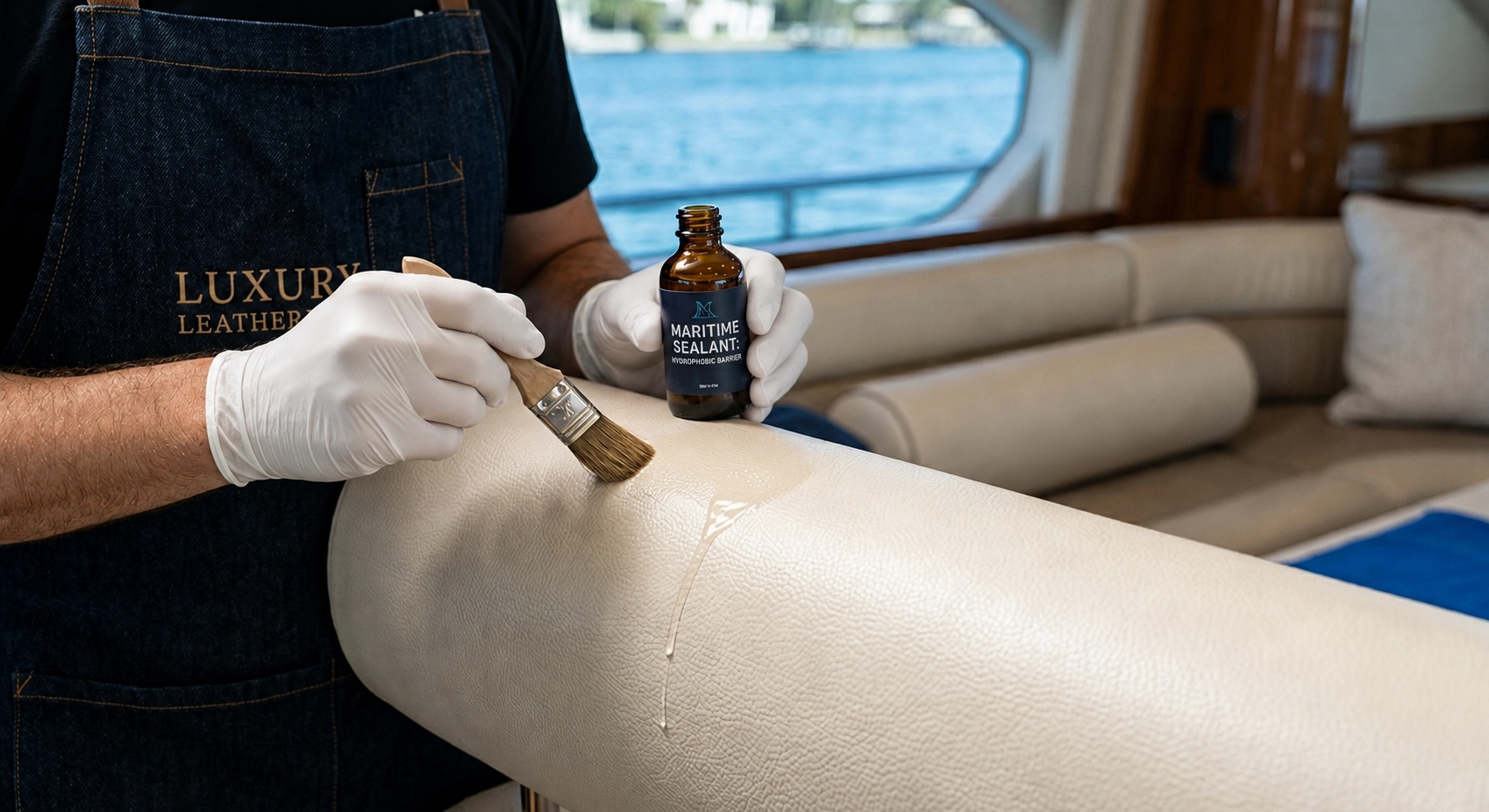
The hallmark of a high-end leather interior is its deep, consistent color. Whether it is a classic Ferrari "Rosso Corsa" red or a modern "Cognac" lounge chair, that color is the result of precise industrial chemistry. Over time, however, heavy use and UV exposure break down these pigments. Restoration is not about painting over the damage; it is an architectural rebuild of the leather’s finish.
The Complexity of Color Theory
Restoring color is one of the most difficult tasks in leather craftsmanship. Leather is not a flat surface; it has depth and varying grain patterns. A "one-size-fits-all" bottled dye cannot account for:
Metamerism: How color looks different under garage LED lights versus natural Florida sunlight.
Translucency: Maintaining the natural "look" of the hide so it doesn't appear like plastic or vinyl.
Undertones: Every tan or grey has hidden blues, reds, or yellows that must be balanced by hand.
The Bonding Process: Pigment vs. Paint
A common mistake in low-quality repairs is the use of heavy paints that sit on top of the leather. This leads to peeling, cracking, and a "sticky" feel. Professional restoration utilizes water-based cross-linking pigments.
These pigments are engineered to bond at a molecular level with the leather fibers. By applying these in thin, atomized layers, a technician can bridge cracks and hide abrasions while keeping the leather’s natural supple feel intact. The result is a finish that is as durable as the day it left the factory.
The Final Seal: Protecting the Work
Color restoration is only half the battle. To ensure the new pigment lasts, a specialized Top Coat (available in Matte, Satin, or Gloss) is applied. This clear layer provides the necessary slip-resistance and chemical protection against oils, sweat, and spills, locking in the artistry for years to come.
Conclusion
True luxury restoration is invisible. When a piece is restored correctly, you shouldn't see the repair—you should only see the leather as it was meant to be. If your investment has lost its luster, professional pigment restoration is the key to reclaiming its soul.