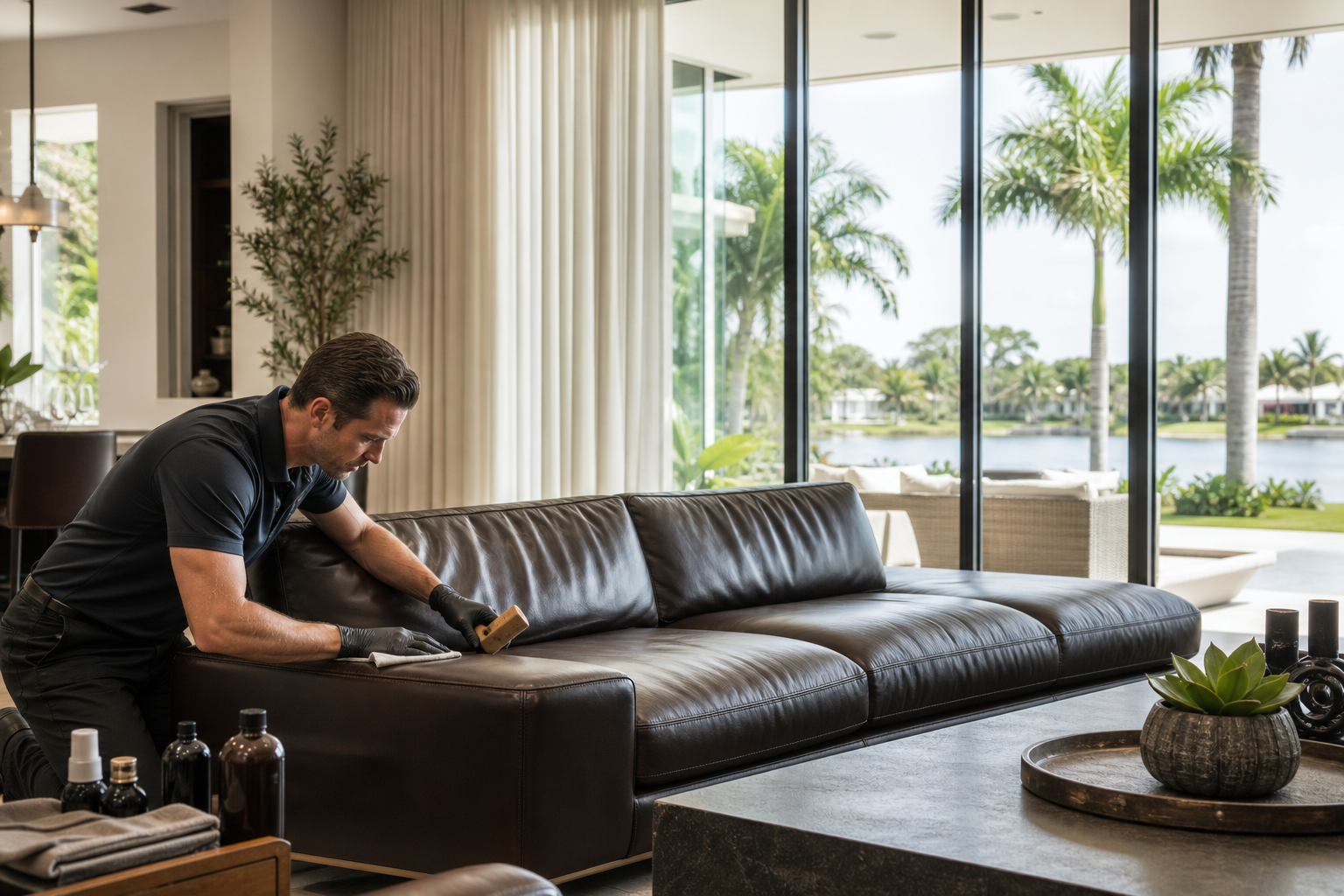
Yes, a leather finish can often be restored, but the right solution depends on the type of leather, the condition of its surface, and how the damage occurred. A worn finish may respond to professional cleaning, conditioning, and protection. Leather with peeling color, severe fading, cracking, staining, or exposed fibers may require more extensive repair, redyeing, or color restoration.
For homeowners and businesses in Southwest Florida, finish restoration is especially relevant. Leather furniture, vehicle interiors, boat seating, and aircraft upholstery are exposed to intense sunlight, heat, humidity, sunscreen, body oils, salt air, and frequent use. These conditions can gradually weaken or discolor the protective surface that gives leather its appearance and resistance to everyday wear.
The most important step is identifying what has failed before applying a product. A leather finish is not simply a layer of polish. It is part of the material's surface system, and an incorrect cleaner, conditioner, dye, or coating can make the damage more difficult to correct.
What Is a Leather Finish?
A leather finish is the surface treatment applied to leather after tanning and coloring. Depending on the leather, it may include pigment, transparent coating, protective resins, waxes, oils, or other materials designed to create a particular look and level of durability.
The finish helps determine whether leather appears matte, satin, glossy, distressed, smooth, or naturally varied. It also influences how the surface responds to moisture, friction, spills, cleaning, and sunlight.
Many finished leathers used in sofas, dining chairs, automotive interiors, marine seating, and commercial furniture have a pigmented or protected surface. This type of leather can often be cleaned and refinished when the finish becomes worn or damaged. Aniline, semi-aniline, nubuck, suede, and other less-protected materials require different techniques and should not be treated as though they have the same surface coating.
Can Every Leather Finish Be Restored?
No restoration process can return every piece of leather to a like-new condition. However, many finish problems are repairable or substantially improvable when addressed by an experienced professional.
Restoration may be appropriate when the leather has:
- Faded from prolonged sun exposure
- Lost color on high-contact areas such as cushions, bolsters, armrests, or steering wheels
- Developed surface scuffs or abrasion
- Become dull, dry-looking, or uneven after years of use
- Shown transfer marks, sunscreen residue, or body-oil buildup
- Experienced minor cracking or surface wear without extensive fiber damage
- Been affected by unsuitable household cleaners or repeated over-wetting
Restoration becomes more complex when the leather is deeply cracked, torn, brittle, delaminated, contaminated beneath the surface, or missing significant material. In those situations, a technician may recommend a combination of repair, color restoration, panel replacement, or other work rather than a simple finish renewal.
Signs That Your Leather Finish May Need Professional Restoration
Uneven color or noticeable fading
Leather exposed to direct windows or outdoor conditions may fade unevenly. Southwest Florida's strong sunlight can make one side of a sofa, vehicle seat, boat cushion, or aircraft interior look significantly lighter than a protected section. If the color is still present but inconsistent, professional color matching and refinishing may improve the appearance.
Peeling or flaking on the surface
Peeling can indicate deterioration of a surface coating, bonded material, or previously applied finish. It may also be associated with synthetic or coated upholstery that is often described generally as leather. Cleaning alone will not correct peeling. The damaged material may need to be stabilized, removed, repaired, and refinished, depending on its construction.
Scuffs, scratches, and worn contact areas
Minor scuffs may affect only the surface coating, while deeper scratches can expose the colored layer or underlying leather. High-use areas such as driver bolsters, chair edges, sofa arms, and marine seating often show this type of wear first.
Dullness, tackiness, or inconsistent sheen
A finish can appear dull after years of soil accumulation, improper cleaning, or surface abrasion. Tackiness may result from product buildup, heat-related changes, or a deteriorating coating. The correct treatment begins with careful evaluation and controlled cleaning rather than adding another dressing.
Dryness and early cracking
Dry-looking leather does not always mean that it simply needs more conditioner. Soil, body oils, heat, and old products can interfere with the surface. If cracking has begun, conditioning may support the surrounding leather, but it cannot rebuild missing material. Repair and finish restoration may be needed together.
How Professionals Restore a Leather Finish
Professional leather finish restoration is a process, not a single product application. The exact steps vary by leather type and condition, but a thorough service commonly includes the following stages.
- Inspection and identification: The technician examines the leather, finish, color, texture, construction, and areas of damage. This helps distinguish finished leather from aniline, nubuck, suede, vinyl, bonded materials, or other upholstery.
- Surface preparation: Dirt, body oils, sunscreen, residue, and previous products can prevent new color or finish from bonding correctly. Preparation must be appropriate for the leather and controlled to avoid unnecessary drying or abrasion.
- Repair of physical damage: Scuffs, scratches, worn edges, small cuts, or areas with lost surface material may need repair before color is restored. Applying color over a damaged texture generally produces an uneven result.
- Color matching: A professional evaluates the existing color and finish level. Matching may involve more than choosing a basic color because many leathers include subtle variations, undertones, and sheen characteristics.
- Application of color or finish: The restoration material is applied in a controlled manner to improve consistency while preserving the natural appearance of the leather. Heavy, uneven application can leave the surface stiff, glossy, or visibly coated.
- Curing and protection: The restored surface needs appropriate time and conditions to settle. A compatible protective treatment may then be recommended based on the leather's use and environment.
These steps are one reason professional restoration is different from wiping on a retail conditioner or leather dye. The goal is not merely to make the leather look darker for a short time. It is to address the cause of the appearance problem and create a finish that is suitable for the material and its use.
What Can Affect Leather Finish Restoration in Southwest Florida?
Heat and humidity
High temperatures and humidity can accelerate the buildup of body oils, sunscreen, and airborne residue. They can also affect how products behave during application and curing. Leather in enclosed vehicles, boats, sunrooms, and seasonal homes may experience especially large changes in temperature and moisture.
UV exposure
Sunlight can fade pigments and weaken some surface materials over time. Window exposure inside a home or vehicle may be less obvious than outdoor exposure, but it can still create uneven fading. Window coverings, shade, and thoughtful furniture placement can help reduce future stress on a restored finish.
Salt air and marine use
Leather and leather-like seating near the coast may encounter salt residue, moisture, and frequent wet-dry cycles. Marine upholstery also experiences friction, sunscreen, and direct sunlight. A finish restoration plan for a boat or yacht should account for the environment rather than treating the upholstery like indoor residential furniture.
Seasonal occupancy
Second homes and seasonal properties may remain closed for extended periods. When the property is reopened, leather may show accumulated dust, stale product residue, dryness, or mildew-related concerns in surrounding areas. Regular inspection and a maintenance plan can help identify changes before they become major restoration projects.
Can You Restore a Leather Finish Yourself?
Some routine care can be handled at home, but finish restoration is a poor candidate for trial and error when the leather is valuable, heavily damaged, or difficult to replace. Household cleaners, alcohol-based products, abrasive sponges, oils, and untested dyes can alter the finish, remove color, create gloss differences, or cause permanent discoloration.
It is also important to understand the difference between cleaning and conditioning. Cleaning removes soil and residue, while conditioning is intended to support the leather's feel and flexibility. Neither step automatically restores missing color or a deteriorated coating. For more context, see why leather cleaning and conditioning are two different steps.
If a product has already caused a reaction, stop testing additional products on the same area. Photograph the damage, note what was applied, and arrange an evaluation. Additional layers can make it harder to determine the original condition and may complicate professional restoration.
How to Choose a Leather Finish Restoration Service
When comparing providers in Southwest Florida, look for a company that evaluates the leather before recommending a treatment. A responsible consultation should address:
- Whether the material is genuine leather, coated leather, vinyl, bonded material, or another upholstery type
- Whether the problem is surface soil, finish wear, color loss, cracking, peeling, or structural damage
- Which portions can be improved and which limitations should be expected
- Whether repair, redye, cleaning, conditioning, or protection should be performed together
- How the restored leather should be maintained in a Florida environment
Ask for a process-based explanation rather than choosing a service solely because it promises a quick color change. A careful technician should be willing to discuss preparation, compatibility, finish level, and maintenance. This is particularly important for luxury furniture, exotic vehicles, boats, aircraft interiors, and commercial seating where appearance and material value matter.
How to Protect a Restored Leather Finish
Once leather has been restored, ongoing care helps preserve the result. Keep the surface free of accumulated oils and residue through appropriate routine cleaning. Avoid placing leather in unnecessary direct sunlight, and use window coverings or shades where practical. In vehicles and marine settings, reduce prolonged exposure to sunscreen, wet clothing, and salt residue.
Use only products appropriate for the specific leather and follow professional guidance. More product is not necessarily better. Heavy oils and dressings can leave residue, attract soil, change the sheen, or interfere with future service. If you are unsure whether a household product is appropriate, review why household cleaners can damage leather before applying it.
Professional inspections can also be useful for high-value or heavily used leather. A maintenance plan may help identify early fading, surface wear, contamination, or drying before the finish requires a more involved restoration.
Frequently Asked Questions
Can a faded leather finish be restored?
Often, yes. If the leather remains structurally sound, professional color restoration or redyeing may improve uneven or faded areas. The result depends on the leather type, the extent of UV exposure, and whether the surface has also cracked or deteriorated.
Can peeling leather be refinished?
Sometimes, but peeling must be evaluated first. The technician needs to determine whether the problem involves a failing coating, bonded material, synthetic upholstery, or damage to the leather itself. Refinishing over loose or unstable material is unlikely to provide a durable result.
Will conditioning restore the original finish?
Conditioning can support the feel and flexibility of suitable leather, but it does not replace missing pigment, repair deep cracks, or rebuild a failing surface coating. Finish restoration may require cleaning, repair, color work, and protection.
How long does leather finish restoration take?
The time depends on the item's size, the number of damaged areas, the leather type, and the work required. An evaluation is the best way to determine the appropriate process and service timing.
Is leather restoration worth it for expensive furniture or a vehicle?
Restoration may be worthwhile when the leather has quality construction, sentimental or financial value, or a design that is difficult to replace. A professional assessment can help you compare restoration needs with replacement considerations without relying on guesswork.
Restore and Preserve Your Leather with Luxury Leather
A damaged finish does not always mean that leather must be replaced. With accurate material identification, careful preparation, appropriate repair, and professional color or finish restoration, many worn surfaces can be improved and preserved.
Luxury Leather provides leather cleaning, conditioning, protection, repair, restoration, and redye services for residential, automotive, marine, aviation, and commercial applications throughout Southwest Florida, including Fort Myers, Cape Coral, Naples, Bonita Springs, Estero, Marco Island, Sanibel, Captiva, Lehigh Acres, Punta Gorda, and Port Charlotte. Contact us for a free consultation to discuss your leather and determine the most appropriate restoration approach.