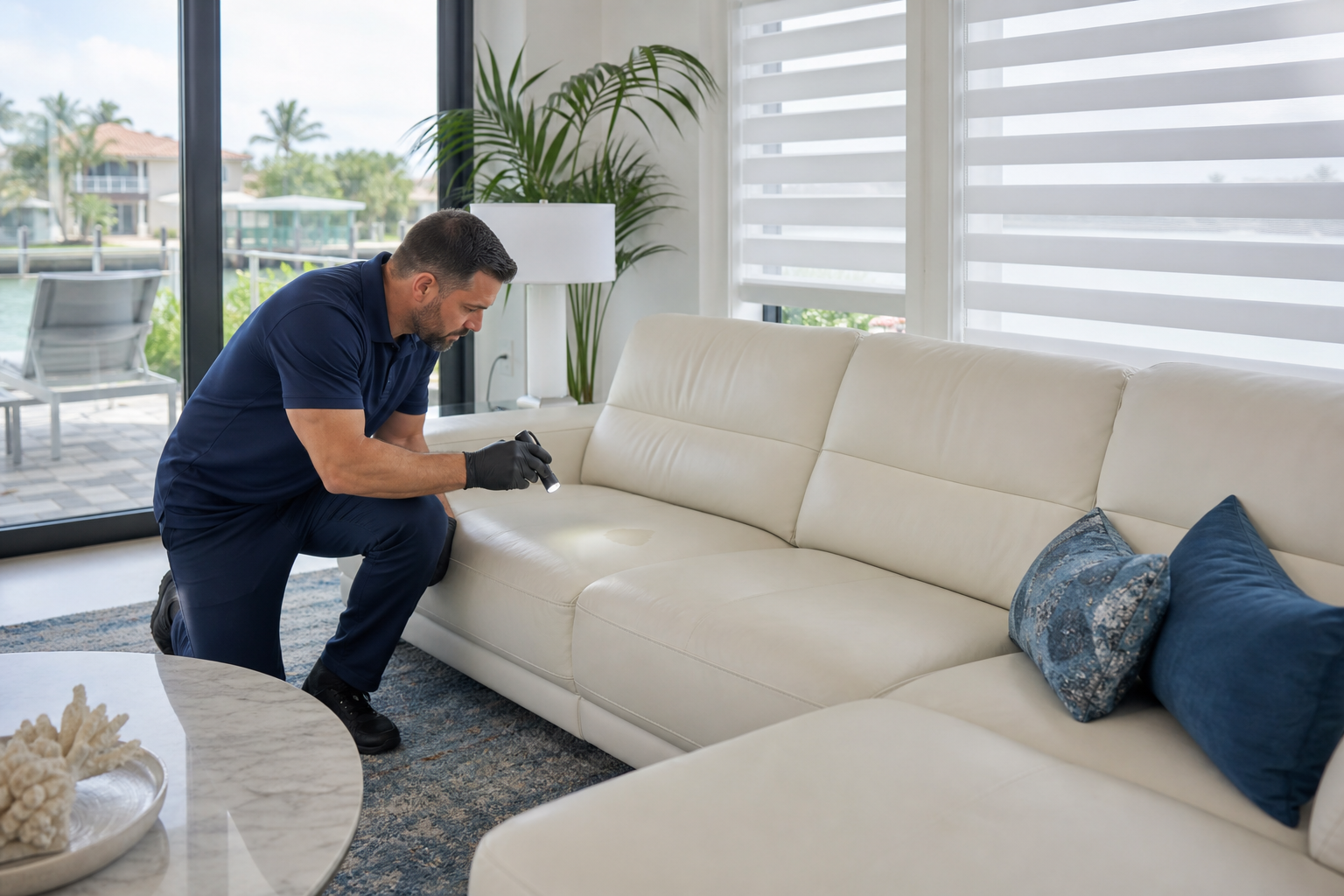
Cat urine on leather is one of the more difficult household accidents to manage. The visible spot may appear small, but urine can travel into seams, perforations, cushioning, and the underside of a leather panel. As it dries, it may leave behind odor, staining, discoloration, or a change in the leather’s finish.
The safest response is to act promptly without saturating the material or using an aggressive household cleaner. Leather is not cleaned like carpet or washable fabric. The right approach depends on the leather type, the age of the accident, the location of the contamination, and whether the urine has reached the interior padding.
This guide explains what homeowners in Southwest Florida can do immediately, which cleaning mistakes may worsen the problem, and when professional leather cleaning or restoration is the better option.
Why Cat Urine Is Difficult to Remove from Leather
Cat urine contains moisture, organic compounds, and salts that can remain after the liquid evaporates. On a finished leather surface, some of the contamination may remain near the top. However, liquid can also move through stitching holes, piping, perforations, cracks, open grain, or damaged finish.
Several factors make cat urine especially challenging:
- Odor can remain after the surface looks clean. A quick wipe may remove the visible residue without addressing contamination below the surface.
- Leather may absorb liquid unevenly. This can produce dark rings, tide marks, stiffness, or changes in sheen.
- Foam and batting can hold odor. If urine reaches the cushion interior, treating only the leather surface may provide limited results.
- Heat and humidity can intensify the smell. Southwest Florida’s warm, humid conditions may make residual odor more noticeable, particularly in rooms with limited ventilation or seasonal homes that remain closed for periods of time.
- Some leather finishes are sensitive to household chemicals. Strong solvents, bleach, ammonia, and abrasive products can strip color or weaken the finish.
For related guidance on another common pet accident, see Dog Urine on Leather: What to Do and When to Call a Professional.
What to Do Immediately After Cat Urine Gets on Leather
Fast, controlled action can reduce the chance of deeper absorption. The goal is to remove as much liquid as possible without spreading it or forcing it farther into the leather.
1. Blot the area gently
Use a clean, white, absorbent cloth or paper towel to blot the affected area. Press lightly and lift repeatedly. Do not rub, scrub, or wipe outward from the center, since friction can spread the urine and disturb the finish.
Continue with fresh sections of the cloth until no more moisture transfers easily. If the accident occurred on a removable cushion, place a towel beneath the leather as well, if possible, so moisture is not pushed into another surface.
2. Check seams, piping, and perforations
Look closely at nearby seams, welting, stitching, and perforated panels. These areas can allow liquid to move below the surface. If the leather is used on a vehicle seat, inspect the area around seat seams and ventilation perforations. For furniture, check the cushion edges and the gap between the seat and back.
3. Allow controlled air circulation
Open windows or use gentle room ventilation when conditions allow. Avoid placing the leather in intense direct sunlight or using a hair dryer, heat gun, or other concentrated heat source. Rapid drying can stiffen leather, alter its finish, or create visible differences between the affected area and the surrounding material.
4. Keep the cat away from the area
If odor remains, a cat may continue returning to the same location. Once the immediate cleanup is complete, limit access until the area has been properly assessed and treated.
How to Clean Cat Urine from Leather Safely
Before applying any product, identify the leather if you can. Most household leather furniture and many automotive interiors use protected or pigmented leather, which has a finish over the colored surface. Aniline, semi-aniline, nubuck, suede, and other less-protected materials require a different level of caution.
You can learn more about finished leather in Pigmented / Protected Leather: What It Is and How to Care for It.
For a small, fresh surface accident
- Blot excess moisture with a clean white cloth.
- Use only a leather-safe cleaner appropriate for the specific finish, following its directions carefully.
- Apply the cleaner to the cloth rather than flooding the leather.
- Work gently over the affected area and slightly beyond the visible edge to avoid creating a hard cleaning boundary.
- Remove product residue with a separate, lightly damp cloth if the product instructions call for it.
- Allow the leather to dry naturally with moderate air circulation.
- Once completely dry, assess the odor, color, texture, and sheen before considering conditioning.
Do not assume that applying more cleaner will produce a better result. Excess moisture can drive contamination deeper, create water marks, or affect adhesives and internal materials.
Conditioning is not the same as cleaning
Leather conditioner may help maintain a suitable feel after cleaning, but it does not replace contamination removal. Applying conditioner over urine residue can mask the problem temporarily, add an unwanted film, or make later professional treatment more difficult.
For a clearer explanation of the difference, read Why Leather Cleaning and Conditioning Are Two Different Steps.
What Not to Use on Cat Urine-Stained Leather
Many common household remedies are too aggressive or too unpredictable for leather. Avoid experimenting with products that are designed for tile, carpet, laundry, or hard surfaces unless a leather professional has confirmed they are suitable for the specific material.
- Bleach: It can discolor leather, weaken fibers, and damage the finish.
- Ammonia-based cleaners: These may affect the finish and can leave a strong odor.
- Alcohol, acetone, or solvent-based products: They can remove color, soften the finish, or create a dull or uneven appearance.
- Vinegar or undiluted acidic remedies: Household acidity does not make a product automatically safe for leather.
- Steam cleaners: Heat and moisture may push contamination into seams or padding and can alter the leather’s appearance.
- Heavy scrubbing: Friction may spread the stain and create a polished or worn patch.
- Excessive enzyme treatment: Some enzyme products are intended for fabric, carpet, or hard surfaces rather than finished leather. A product that works on one material may damage another.
- Air fresheners and fragrance sprays: These usually cover odor instead of removing its source and may leave an oily or sticky residue.
When Cat Urine Has Reached the Cushion or Padding
A persistent odor often indicates that the contamination is not limited to the outer leather. Cat urine can enter through seams, zipper openings, perforations, damaged areas, or the underside of a cushion. Once it reaches foam, batting, wood, or other internal components, surface cleaning alone may not be enough.
Signs that the problem may be deeper include:
- The smell returns after the leather dries.
- Odor becomes stronger in warm or humid conditions.
- The affected area is near a seam, cushion edge, or perforated panel.
- A yellowish or darkened mark remains after gentle cleaning.
- The leather feels stiff, tacky, swollen, or unusually soft.
- The same spot has been treated repeatedly with household cleaners.
- The accident occurred on an absorbent or unfinished leather.
Professional evaluation can determine whether the leather can be cleaned in place, whether a cushion should be opened or treated separately, and whether the surface needs conditioning, color repair, or refinishing after contamination is addressed. In some cases, the most appropriate recommendation may involve replacing an affected internal component rather than repeatedly treating the exterior.
Cat Urine on Leather Furniture, Car Seats, and Other Applications
Leather sofas and chairs
Furniture cushions can hide contamination along the lower edge, underside, zipper, or foam. Removeable covers should not automatically be placed in a washing machine. Washing, heat, or aggressive detergents can shrink leather or change its finish. Keep track of which cushion and side were affected so the entire contamination path can be assessed.
Automotive leather interiors
Vehicle seats contain seams, foam, sensors, wiring, heating elements, and ventilation channels. Avoid saturating the seat or directing liquid into perforations. Florida heat can make residual odor more apparent inside a closed vehicle, while direct sun may accelerate fading or drying of the finish. A professional automotive leather care assessment is especially useful when urine has reached a seat seam or cushion.
Marine and vacation-home leather
Leather in boats, condos, and seasonal homes may be exposed to humidity, sunscreen, salt residue, and long periods without ventilation. These conditions can complicate odor evaluation and increase the risk of mildew-related concerns around upholstery and padding. If the property has been closed for an extended period, ventilate the space and document the affected locations before attempting extensive cleaning.
How Southwest Florida’s Climate Affects Leather Odor and Damage
Southwest Florida’s heat, humidity, intense sunlight, and coastal air can make leather maintenance more demanding. Humid conditions do not create cat urine contamination, but they can make residual odor more noticeable and slow natural drying. Sun exposure can also reveal discoloration or uneven sheen after an area has been cleaned.
Homes in Fort Myers, Cape Coral, Naples, Bonita Springs, Estero, Marco Island, Sanibel, Captiva, Lehigh Acres, Punta Gorda, Port Charlotte, and surrounding communities may also experience seasonal occupancy. When a home remains closed, limited air circulation can allow odors to become concentrated. Early professional evaluation may help prevent a small accident from becoming a more involved restoration project.
When to Call a Professional Leather Care Specialist
Consider professional help when the odor persists, the stain is old, the leather is valuable or difficult to replace, or the urine may have reached the interior. Professional leather care is also appropriate when the material is aniline, semi-aniline, exotic, suede, nubuck, antique, or otherwise unfamiliar.
A specialist can evaluate the leather’s finish, identify whether color has changed, determine how far the contamination may have traveled, and select a treatment method that balances cleaning with preservation. If the finish has been damaged, additional services such as leather repair, redye, or color restoration may be considered after cleaning.
Do not wait for repeated home treatments to create a larger issue. Multiple applications of unsuitable products can make the leather more difficult to clean and may add damage that was not present initially.
Frequently Asked Questions
Can cat urine be completely removed from leather?
The result depends on the leather type, the age and amount of contamination, and whether urine reached the padding or other internal materials. A small, fresh surface accident may respond well to careful treatment. Persistent odor or deep contamination requires a professional assessment.
Does leather absorb cat urine?
Finished leather may resist some surface absorption, but liquid can enter through seams, stitching holes, perforations, cracks, damaged finish, and cushion edges. The underlying foam or padding may also absorb the urine.
Can I use an enzyme cleaner on leather?
Only use a product when its directions specifically indicate that it is suitable for the particular leather finish. Products made for carpet or fabric may discolor, dry, or otherwise damage leather. Test any approved product in an inconspicuous area first.
Why does the odor return after cleaning?
Odor may return because residue remains beneath the surface or inside the cushion. Heat and humidity can also make a remaining odor more noticeable. Repeatedly masking the smell with fragrance usually does not address the source.
Should I condition leather after removing cat urine?
Conditioning may be appropriate after the leather has been properly cleaned and has dried completely, but it should not be used to cover urine residue. The correct conditioner depends on the leather finish and its current condition.
Professional Cat Urine Leather Cleaning in Southwest Florida
Cat urine on leather should be handled carefully, especially when the item is valuable, heavily used, perforated, or exposed to Southwest Florida’s warm and humid climate. Blot promptly, avoid harsh household chemicals and excess moisture, and seek professional guidance when odor or discoloration persists.
Luxury Leather provides professional leather cleaning, conditioning, repair, and restoration services for residential and automotive leather throughout Southwest Florida. Contact us for a free consultation to discuss the affected item and determine the most appropriate next step.