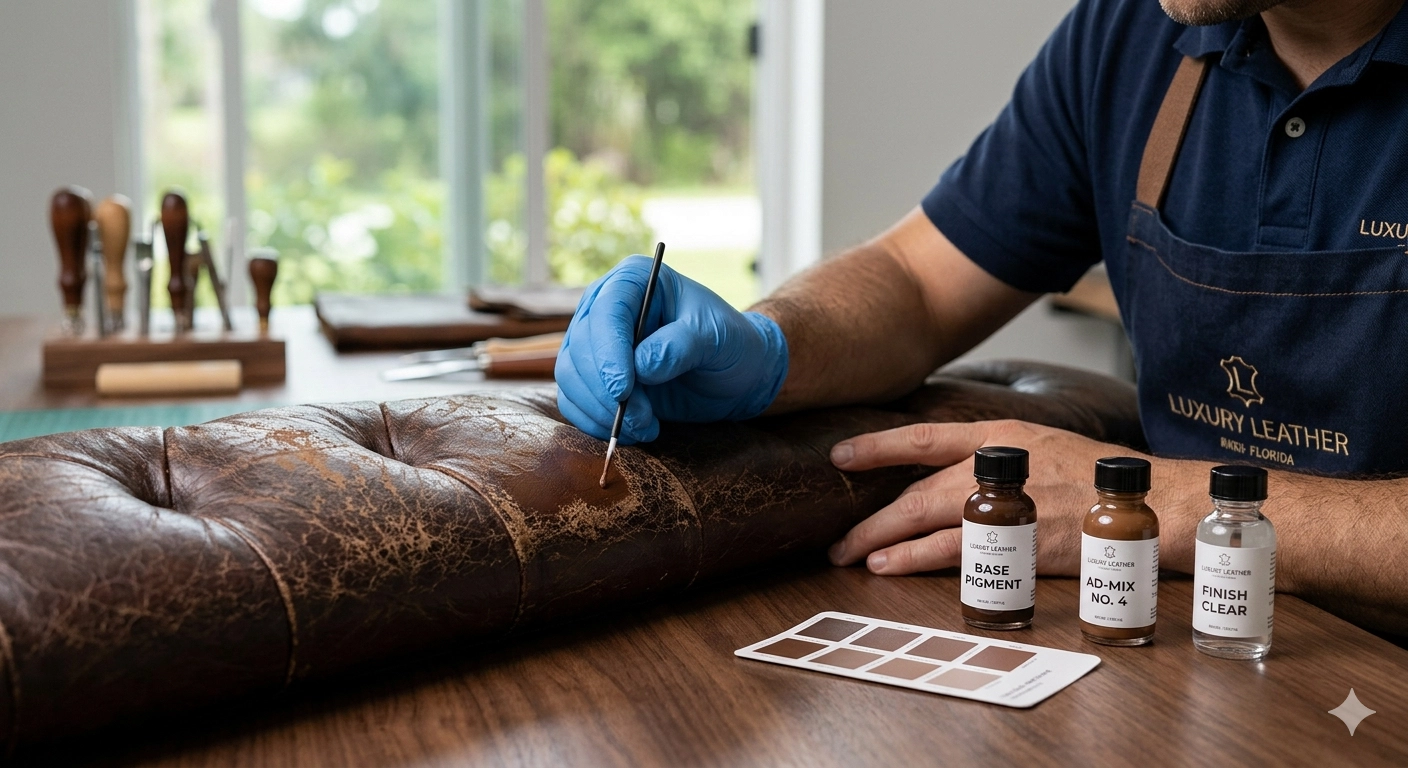
In the landscape of luxury leather, aniline stands alone. Often found in the finest bespoke automotive interiors, elite furniture pieces, and haute couture, aniline is prized because it has no surface coating; the beauty of the natural hide is completely visible. This "open-pore" structure allows the leather to breathe perfectly, creating a soft, warm feel that cannot be replicated. However, this unmatched purity makes it extremely vulnerable.
The Open-Pore Vulnerability
Most leather (even luxury grades) receives a pigment and protective topcoat. This finish acts as a barrier against water, oils, and friction. Aniline has none of this. Think of it like unfinished wood or fine silk. Any liquid—spilled water, skin oils, or specialized cleaning agents—is instantly absorbed deep into the leather fibers. Once a stain is absorbed into the structure of an aniline hide, removing it topically is often impossible without aggressive techniques that alter the leather itself.
Why Standard "Conditioners" Fail
The biggest mistake owners of aniline pieces make is using generic leather conditioners, including the "DIY" products mentioned in our previous article. Standard conditioners often rely on surface emollients or even oils that clog pores. When applied to aniline, these generic formulas can:
Create Uneven Patching: The product is absorbed at different rates, leaving dark, oily splotches.
Permanently Alter the Color: The generic oils can cause the rich, transparent color to become dull and heavy.
Accelerate Failure: By sealing the open structure, they stop the hide from breathing, ultimately dry it out from the inside.
The Role of Professional Chemical Conditioning
Preserving aniline leather requires a scientifically-formulated, professional intervention. This process, often referred to as "Aniline Feed" or chemical re-conditioning, involves the deep injection of specific conservation-grade lipids, natural oils, and UV inhibitors directly into the hide structure.
A skilled technician applies this critical defense in two stages: First, a deep saturation treatment that replenishes the internal moisture and nutrient levels lost to evaporation (especially in dry or coastal climates like Kendall West, FL). Second, a specialized, transparent barrier treatment that remains permeable but repels spills long enough to allow safe cleanup, without ever dulling the hide’s natural sheen.
Conclusion
Luxury is defined by its authenticity, and aniline leather is the most authentic expression of the material. However, owning it requires an understanding of its unique needs. If you have chosen an open-pore hide, standard maintenance is insufficient. To protect its value and beauty, your only defense is professional chemical conditioning.