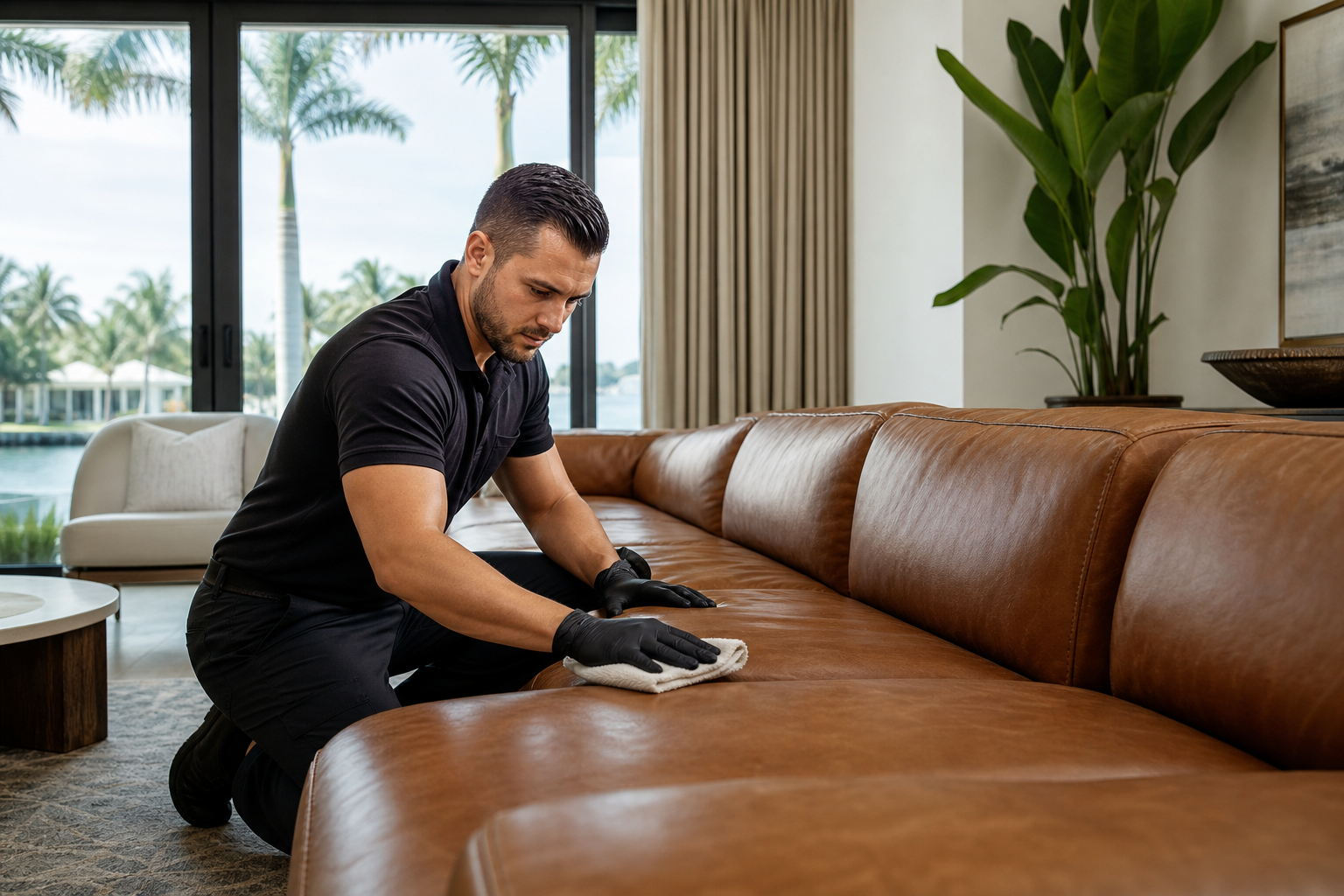
Leather is durable, comfortable, and designed to age beautifully—but it still needs regular care. Dust, body oils, sunscreen, perspiration, food residue, pet contamination, humidity, and UV exposure can gradually affect the surface. In Southwest Florida, heat and moisture can make those concerns more noticeable, especially in frequently used homes, vehicles, boats, aircraft, and commercial spaces.
So, how often should leather be professionally cleaned? For many leather surfaces, professional cleaning once or twice a year is a reasonable starting point. However, the ideal schedule depends on the type of leather, how often it is used, where it is located, and whether it is exposed to contaminants or harsh environmental conditions.
Professional leather cleaning is not simply a more intensive version of wiping a surface at home. A trained technician evaluates the leather, identifies its finish, selects an appropriate cleaning method, and looks for early signs of drying, discoloration, cracking, staining, or finish wear. This approach helps preserve valuable leather and may reduce the need for more extensive restoration later.
Recommended Professional Leather Cleaning Schedule
There is no single schedule that applies to every leather item. The following guidelines can help you determine when to arrange professional service.
| Leather application | General professional cleaning guideline | Why frequency may vary |
|---|---|---|
| Lightly used residential furniture | Every 12–18 months | Lower use may mean less body oil, dust, and surface soil. |
| Frequently used household furniture | Every 6–12 months | Daily contact, children, pets, and food or drink can increase buildup. |
| Automotive leather interiors | Every 6–12 months | Heat, UV exposure, perspiration, sunscreen, and frequent entry and exit affect the surface. |
| Boats and marine seating | Every 3–6 months or as needed | Saltwater, sunscreen, humidity, and outdoor exposure can accelerate soiling. |
| Private aircraft interiors | Every 6–12 months or according to use | Frequent contact, travel conditions, and high-value materials require careful maintenance. |
| Commercial or medical office seating | Every 3–6 months | High traffic, repeated contact, and appearance expectations increase maintenance needs. |
These are planning guidelines rather than fixed rules. A professional assessment is useful when leather has visible staining, an unfamiliar finish, odor, sticky areas, color transfer, or signs of damage.
What Determines How Often Leather Should Be Professionally Cleaned?
Frequency of use
A leather sofa used every day will collect more body oils, skin residue, dust, and clothing dye than a chair used occasionally. The same applies to a vehicle driven daily or a reception area that serves many visitors. High-contact surfaces usually benefit from more frequent professional attention.
Armrests, seat cushions, steering wheels, gear shifts, headrests, and other areas that receive repeated contact often show soil or finish changes before the rest of the item. These high-use areas may need targeted attention even when the overall leather still appears clean.
Leather type and finish
Leather is not a single uniform material. Protected or pigmented leather has a surface coating that provides some resistance to everyday wear and staining. Aniline, semi-aniline, nubuck, suede, and other more sensitive materials require different techniques and products.
Cleaning a delicate or absorbent leather as though it were a protected leather can create discoloration, water marks, texture changes, or other damage. Before setting a maintenance schedule, it is important to understand what type of leather is present and how it was finished.
For more background, see Pigmented / Protected Leather: What It Is and How to Care for It.
Florida heat, humidity, and UV exposure
Southwest Florida leather is often exposed to conditions that are different from those in a dry or temperate climate. Heat can increase the transfer of body oils and sunscreen. Humidity may contribute to unpleasant odors or environmental conditions that encourage mildew on improperly maintained surfaces. Strong sunlight can fade exposed areas and contribute to finish deterioration over time.
Leather near windows, in sun-facing vehicles, on boats, or in seasonal homes may need closer monitoring. Professional cleaning cannot eliminate environmental exposure, but it can remove accumulated contamination and help identify areas that need additional protection or restoration.
Pets, children, and food or drink
Households with pets or young children often need a more proactive leather care schedule. Claws can scratch the finish, while pet oils, dander, drool, food residue, and accidents can become difficult to address if left untreated. Spills may also spread beyond the visible spot, especially when liquid enters seams or perforations.
Prompt professional evaluation is especially important for urine, vomit, milk, or other organic contamination. Surface wiping may improve the appearance temporarily without addressing contamination that has entered seams, cushioning, or underlying materials.
Signs Your Leather Needs Professional Cleaning
You do not have to wait for a major stain or obvious damage before scheduling service. Look for these signs:
- The leather looks dull, hazy, greasy, or unevenly soiled.
- Armrests, headrests, or steering wheels feel sticky or slick.
- Light-colored leather has developed gray, yellow, or dark contact areas.
- There is visible sunscreen, body oil, makeup, food, or drink residue.
- The leather has an odor that regular dusting does not remove.
- Color is transferring from clothing or appears to be building up on the surface.
- There are water marks, tide lines, or uneven areas after a spill.
- The finish looks dry, worn, cracked, or noticeably different from nearby areas.
- A boat, vehicle, or property has been closed up for an extended period.
Some problems that appear to be dirt are actually finish wear, dye transfer, water damage, or a change in the leather itself. In those cases, repeated cleaning may not solve the problem and could make an unsuitable treatment more noticeable.
Professional Cleaning Versus Routine Home Maintenance
Routine care and professional cleaning serve different purposes. Home maintenance may include gently removing loose dust with a clean cloth, addressing fresh spills carefully, and following the leather manufacturer’s care instructions. Professional service is more appropriate when contamination has accumulated, a stain is difficult to identify, the leather is valuable or delicate, or the surface has begun to change.
Cleaning should also be distinguished from conditioning. Cleaning removes soil and contamination from the surface. Conditioning is a separate step intended to support the feel and appearance of suitable leather finishes. Applying conditioner over body oils, grime, or residue can leave the surface greasy and may interfere with proper cleaning.
Learn more about the difference in Why Leather Cleaning and Conditioning Are Two Different Steps.
Why Household Products Can Make Leather Problems Worse
Many household cleaning products are designed for hard, washable surfaces rather than finished leather. Disinfecting wipes, baby wipes, degreasers, dish soap, alcohol-based products, and multipurpose sprays may affect the finish, remove color, create a sticky residue, or leave a visible ring.
Even when a product appears to remove a stain, the result may include a lightened patch, altered sheen, or weakened finish. Rubbing aggressively can spread the contamination and create abrasion. This is particularly risky on automotive, marine, aviation, and luxury residential leather where matching the original appearance may be difficult.
For additional guidance, read Why Household Cleaners Can Damage Leather.
When Southwest Florida Properties May Need More Frequent Service
Seasonal homes and vacation properties
A home that is closed for part of the year may not need constant cleaning, but it should be inspected when reopened. Florida humidity, limited air circulation, dust, and unnoticed spills can affect leather during periods of limited occupancy. Cleaning before a property is closed and again after it reopens may be appropriate depending on the environment and the condition of the furniture.
Boats and marine interiors
Marine leather and coated upholstery face saltwater, sunscreen, spray, heat, and intense sunlight. Boat seating can look acceptable while contamination is accumulating in seams, piping, and textured areas. Regular professional cleaning, followed by suitable protection and good ventilation, can help maintain the appearance of marine upholstery.
Automotive interiors
Southwest Florida vehicles often experience high cabin temperatures and strong sun exposure. Leather interiors also collect perspiration, sunscreen, cosmetics, denim dye, and dust from frequent use. A professional cleaning schedule can be adjusted for daily drivers, collector vehicles, exotic cars, and vehicles that spend substantial time outdoors.
Commercial and medical offices
Reception seating, waiting-room furniture, conference chairs, treatment-room seating, and other commercial leather surfaces experience repeated contact. A planned maintenance program can make cleaning more consistent and help property managers address wear before it becomes a larger appearance issue. Medical offices should also ensure that any cleaning approach is appropriate for the leather finish and the facility’s operational requirements.
How to Choose a Professional Leather Cleaning Service
When comparing leather care providers, ask how the technician will evaluate the material before cleaning. A careful service process should account for:
- The leather type, finish, color, texture, and overall condition.
- The source and age of stains or contamination.
- Previous cleaning attempts, repairs, dye work, or protective treatments.
- High-contact areas, seams, perforations, piping, and other vulnerable details.
- Whether the item needs cleaning only or also conditioning, protection, repair, or restoration.
It is also reasonable to ask whether the provider handles the specific application involved. Residential furniture, automotive upholstery, marine seating, aircraft interiors, and commercial leather may require different considerations. A professional recommendation should be based on the actual leather and its condition rather than a one-size-fits-all package.
Frequently Asked Questions
How often should leather furniture be professionally cleaned?
Lightly used furniture may be suitable for professional cleaning every 12 to 18 months. Frequently used sofas, chairs, and recliners often benefit from service every 6 to 12 months, particularly in homes with pets, children, or heavy daily use.
Can I wait until leather looks dirty?
Visible soil is not the only sign that leather needs attention. Body oils, sunscreen, residue, and fine contamination can build up before they become obvious. Cleaning based on use and environment, rather than appearance alone, can help prevent avoidable finish problems.
Does professional cleaning remove cracks in leather?
Cleaning can remove surface contamination, but it does not reverse structural damage or restore missing finish. Cracking, peeling, deep scratches, discoloration, and worn areas may require leather repair, redye, or restoration after the surface has been properly evaluated.
How often should boat leather be cleaned in Florida?
Marine seating may need professional cleaning every three to six months or as conditions require. Frequent exposure to saltwater, sunscreen, humidity, and direct sunlight can increase the need for maintenance.
Should leather be conditioned every time it is cleaned?
Not necessarily. Conditioning is a separate service and should be appropriate for the leather type and finish. A professional can determine whether conditioning or protection is suitable after evaluating the cleaned surface.
Schedule Professional Leather Care in Southwest Florida
The right cleaning schedule depends on your leather, how it is used, and the conditions surrounding it. Regular professional care can help maintain the appearance of residential furniture, vehicle interiors, marine seating, aircraft upholstery, and commercial leather while identifying problems before they require more extensive restoration.
Luxury Leather provides professional leather cleaning, conditioning, protection, repair, and restoration services throughout Southwest Florida, including Fort Myers, Cape Coral, Naples, Bonita Springs, Estero, Marco Island, Sanibel, Captiva, Lehigh Acres, Punta Gorda, Port Charlotte, and surrounding communities. Contact us for a free consultation to discuss your leather and receive a care recommendation based on its condition and use.