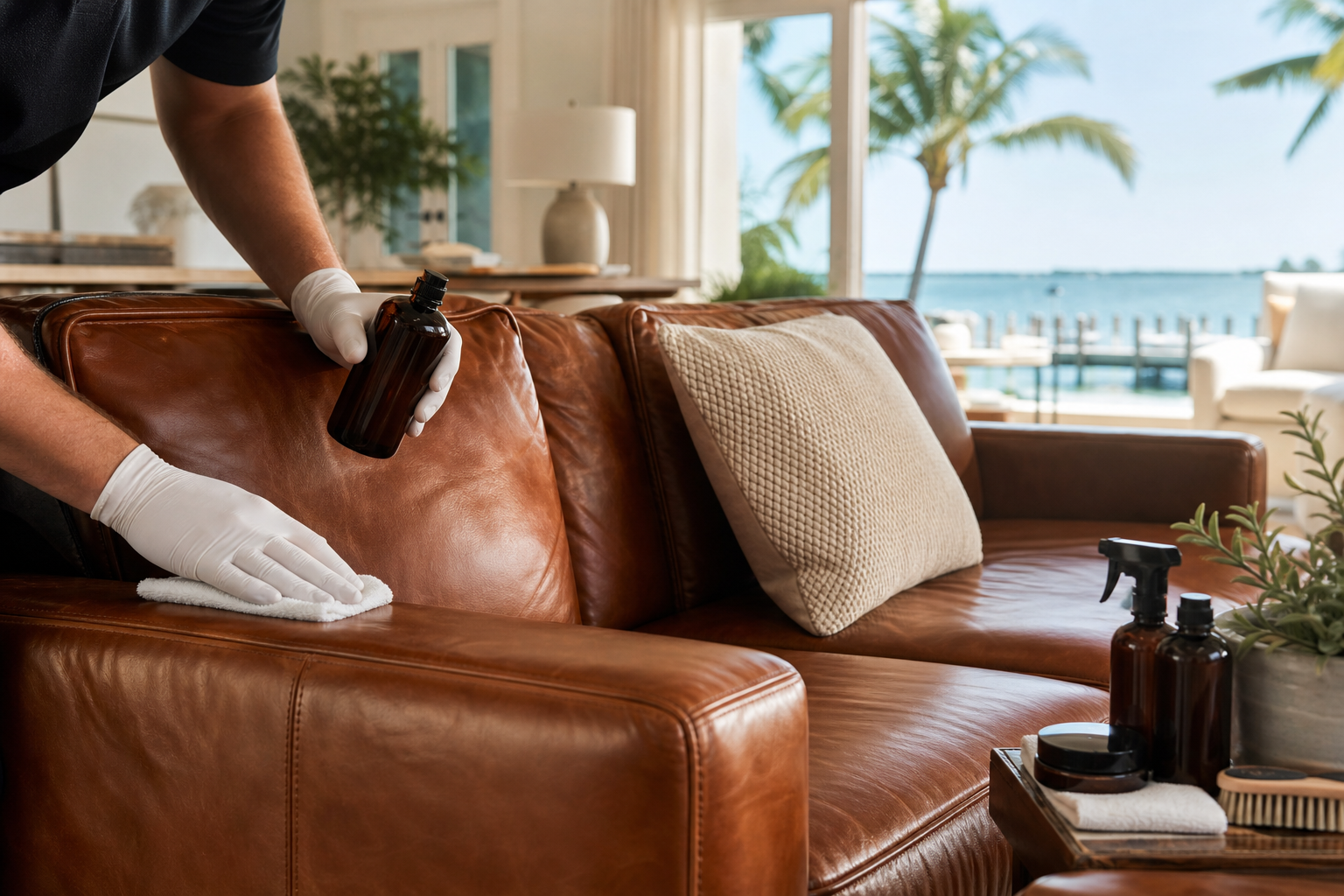
Leather furniture is valued for its comfort, durability, and timeless appearance, but it still needs thoughtful care to stay beautiful. In Southwest Florida, leather may be exposed to intense sunlight, high humidity, air conditioning, sunscreen, body oils, pets, food spills, and seasonal-home conditions. Over time, these factors can soil the surface, weaken the finish, dry certain areas, or contribute to cracking and discoloration.
Protecting leather furniture is not about applying as many products as possible. The right approach combines regular dust removal, appropriate cleaning, proper conditioning when suitable, protection from damaging environmental conditions, and professional attention when the finish or structure needs more than routine maintenance.
This guide explains how to protect leather furniture in a practical way, including what to do at home, what to avoid, and when professional leather care is the better choice.
What Leather Furniture Needs Protection From
Leather upholstery is a finished surface. Its appearance and performance depend not only on the hide itself, but also on the pigments, coatings, and protective finish applied during manufacturing or later restoration. Everyday contaminants can gradually affect that surface even when the furniture does not look visibly dirty.
- Sunlight and UV exposure: Direct sunlight can contribute to fading and may accelerate deterioration of some finishes.
- Body oils and perspiration: Frequently used areas such as arms, headrests, and seat cushions can develop darkened or sticky-looking buildup.
- Sunscreen and skin-care products: These products can transfer to leather and may interact with the finish over time.
- Food and drink spills: Liquids and oily substances can leave staining or penetrate damaged areas if they are not addressed promptly.
- Humidity and moisture: Southwest Florida’s humid conditions can contribute to musty odors, mold, or mildew when leather is stored or maintained in poorly ventilated areas.
- Friction: Clothing, pet claws, hardware, and repeated movement can wear the finish on high-use sections.
Protection begins by identifying the conditions affecting your specific furniture. A lightly used sofa in a shaded, climate-controlled room has different needs from a frequently used sectional near a sunny window in a coastal home.
How to Protect Leather Furniture: A Practical Routine
1. Remove dust and loose debris regularly
Use a soft, clean cloth or a vacuum with a suitable upholstery attachment to remove dust from the surface, seams, crevices, and beneath cushions. Loose grit can act as an abrasive when people sit down or when cushions move across the frame.
Take care around piping, perforations, stitching, and decorative details. Avoid aggressive brushing or dragging a vacuum nozzle directly across the finish.
2. Clean before applying any conditioner or protectant
Protective products should not be used to cover over accumulated soil. Body oils, dust, sunscreen, and residue can interfere with how a product interacts with the leather and may leave the surface uneven or tacky.
Use only a cleaner intended for the type and finish of leather you own, and follow the furniture manufacturer’s care guidance when it is available. Test any product in a concealed area first. If the leather is aniline, semi-aniline, nubuck, suede, distressed, painted, or otherwise unusual, household cleaning methods may be especially risky.
For additional guidance, see why all-purpose cleaner does not belong on leather.
3. Address spills promptly without scrubbing
Blot fresh spills with a clean, absorbent cloth. Do not rub forcefully, saturate the leather, or use heat to speed drying. Rubbing can spread the spill and create a larger area of disturbed finish.
Water-based spills and oily substances may require different treatment, and some stains cannot be safely removed without affecting the color or protective coating. If a spill has already dried or left a visible mark, professional assessment can help determine whether cleaning, recoloring, or restoration is appropriate.
4. Use conditioning products carefully
Conditioning is often described as a universal solution for leather, but not every leather finish needs the same type or amount of conditioning. Some finished upholstery has a sealed surface that does not readily absorb traditional oils or conditioners. Excess product may attract soil, alter the sheen, or leave the leather feeling greasy.
Conditioning should be selected based on the leather’s finish, age, condition, and manufacturer recommendations. It should not replace cleaning, protection from sunlight, or repair of damaged areas.
5. Keep the leather properly protected
Professional leather protection may help reduce the effect of routine soil, body oils, and everyday contact, depending on the leather and the product selected. Protection is not a substitute for cleaning, and it does not make leather stain-proof. Its purpose is to support easier maintenance and help preserve the appearance of the finished surface.
Protective topcoats may also be relevant when a finish has become worn or vulnerable. However, the correct approach depends on whether the issue is surface contamination, finish wear, color loss, cracking, or structural damage. Learn more about protective topcoats for leather.
How to Protect Leather Furniture From Southwest Florida Conditions
Reduce direct sunlight and heat
Position leather furniture away from prolonged direct sunlight when possible. Window coverings, shades, curtains, and thoughtful furniture placement can reduce exposure. Rotate removable cushions if the design allows, but do not assume rotation will prevent fading if one side of the furniture remains in direct sun.
Do not place leather immediately beside a heat source or in a location where concentrated sunlight heats one section of the upholstery. Uneven exposure can cause noticeable differences in color and finish across a sofa or chair.
Maintain a stable indoor environment
Air conditioning helps make Florida homes comfortable, but leather furniture can still be affected by changes in temperature and humidity. Seasonal properties deserve particular attention. A home that remains closed for extended periods may have reduced air circulation and increased risk of musty odors or moisture-related problems.
Keep rooms reasonably ventilated and address signs of excess moisture promptly. If leather develops a musty smell, spotting, or visible mildew, avoid spreading the contamination by brushing or wiping aggressively. See our guide to mold and mildew on leather in Southwest Florida.
Manage sunscreen, lotions, and body oils
High-use areas deserve special attention in homes where residents or guests regularly use sunscreen, tanning products, moisturizers, or other skin-care products. Allow products to absorb before sitting on leather when possible, and use clean textiles over particularly vulnerable areas if appropriate for the furniture.
Do not wait until headrests and armrests look dark or shiny before cleaning them. By that stage, residue may have accumulated and may be affecting the finish.
Protect against pets and sharp objects
Pet hair is generally easy to remove, but claws, chewing, and repeated contact can scratch or puncture leather. Keep sharp objects such as keys, buckles, pens, and rough hardware away from the upholstery. If you use throws or protective covers, choose materials that will not transfer dye or trap moisture against the leather.
Products and Habits That Can Damage Leather
Many leather problems begin with well-intentioned maintenance. Common household products may contain solvents, detergents, oils, alcohol, or other ingredients that are not appropriate for upholstery leather.
- Do not use all-purpose household cleaner unless the leather manufacturer specifically approves it.
- Do not apply furniture polish, saddle soap, silicone products, or oily cleaners without confirming compatibility.
- Do not use disinfectants, wipes, bleach, ammonia, or abrasive sponges as a general leather-care method.
- Do not saturate leather with water or leave it damp beneath cushions.
- Do not use a hair dryer, space heater, or direct heat to dry a spill.
- Do not apply multiple products together simply because the leather appears dry or dull.
Cleaning can also remove or disturb the finish before the leather itself appears damaged. If the surface has become sticky, cloudy, unusually shiny, faded, or discolored after product use, stop experimenting and have the material evaluated.
How to Choose a Leather Protection Service
When comparing professional leather-care options, look beyond the word “protection.” A useful service should begin with an assessment of the leather and its current condition.
- Ask whether the leather will be identified first: Finished leather, aniline leather, nubuck, suede, vinyl, and coated specialty materials require different approaches.
- Ask what preparation is included: Protection works more effectively when the surface is appropriately cleaned and free from heavy residue.
- Ask how wear and damage will be handled: Cracks, peeling finish, dye loss, scratches, and punctures may require repair or restoration rather than a maintenance product.
- Ask whether testing is performed: A concealed-area test can help reveal how the material may respond.
- Ask about ongoing maintenance: The right cleaning frequency depends on use, exposure, color, household activity, and the leather’s finish.
Professional leather care is especially useful for valuable furniture, large sectional sofas, light-colored upholstery, heavily used seating, and furniture exposed to coastal air, sunlight, pets, or frequent guests.
When Leather Furniture Needs More Than Routine Protection
Protection cannot reverse every type of damage. Contact a professional when you notice:
- Cracking, peeling, or flaking finish
- Deep scratches, cuts, or punctures
- Faded or uneven color
- Persistent odors or suspected mold and mildew
- Sticky, brittle, or unusually rough areas
- Stains that remain after gentle blotting
- Finish transfer, discoloration, or damage after using a household product
Early evaluation may provide more options than waiting until the damage spreads. Depending on the material and condition, the appropriate service may involve professional cleaning, conditioning, repair, redye and color restoration, finish restoration, or a customized maintenance plan.
Frequently Asked Questions
How often should leather furniture be protected?
There is no single schedule for every sofa or chair. Use, color, leather type, sunlight, pets, body oils, and household conditions all matter. Frequently used furniture in Southwest Florida may benefit from more regular professional evaluation than lightly used furniture in a shaded room.
Does leather protection make furniture stain-proof?
No. Protection may help support routine maintenance, but it does not make leather immune to spills, dyes, oils, sunlight, scratches, or wear. Prompt attention is still important.
Can I protect leather furniture with household moisturizer or oil?
Household moisturizers and oils may leave residue, change the appearance, attract soil, or interact poorly with the finish. Use products selected for the specific leather and follow manufacturer guidance.
Should I cover leather furniture in a Florida vacation home?
A breathable, colorfast cover may be useful in some situations, but a cover should not trap moisture against the leather. The home should also be maintained with appropriate climate control and ventilation. Avoid plastic coverings that can hold condensation against the upholstery.
Can professional protection repair cracked leather?
Protection alone does not repair structural damage or restore missing color. Cracked or peeling leather should be assessed to determine whether repair, finish restoration, redyeing, or replacement of a damaged section is appropriate.
Protect Your Leather Furniture With the Right Care
Leather furniture lasts best when protection is treated as an ongoing care strategy rather than a one-time product application. Keep the surface free from excessive soil, limit direct sunlight, respond carefully to spills, avoid unsuitable household cleaners, and address early signs of wear before they become more extensive.
Luxury Leather provides professional leather cleaning, conditioning, protection, repair, and restoration services for homes throughout Southwest Florida, including Fort Myers, Cape Coral, Naples, Bonita Springs, Estero, Marco Island, Sanibel, Captiva, Lehigh Acres, Punta Gorda, and Port Charlotte. Contact us for a free consultation to discuss the best way to preserve your leather furniture.