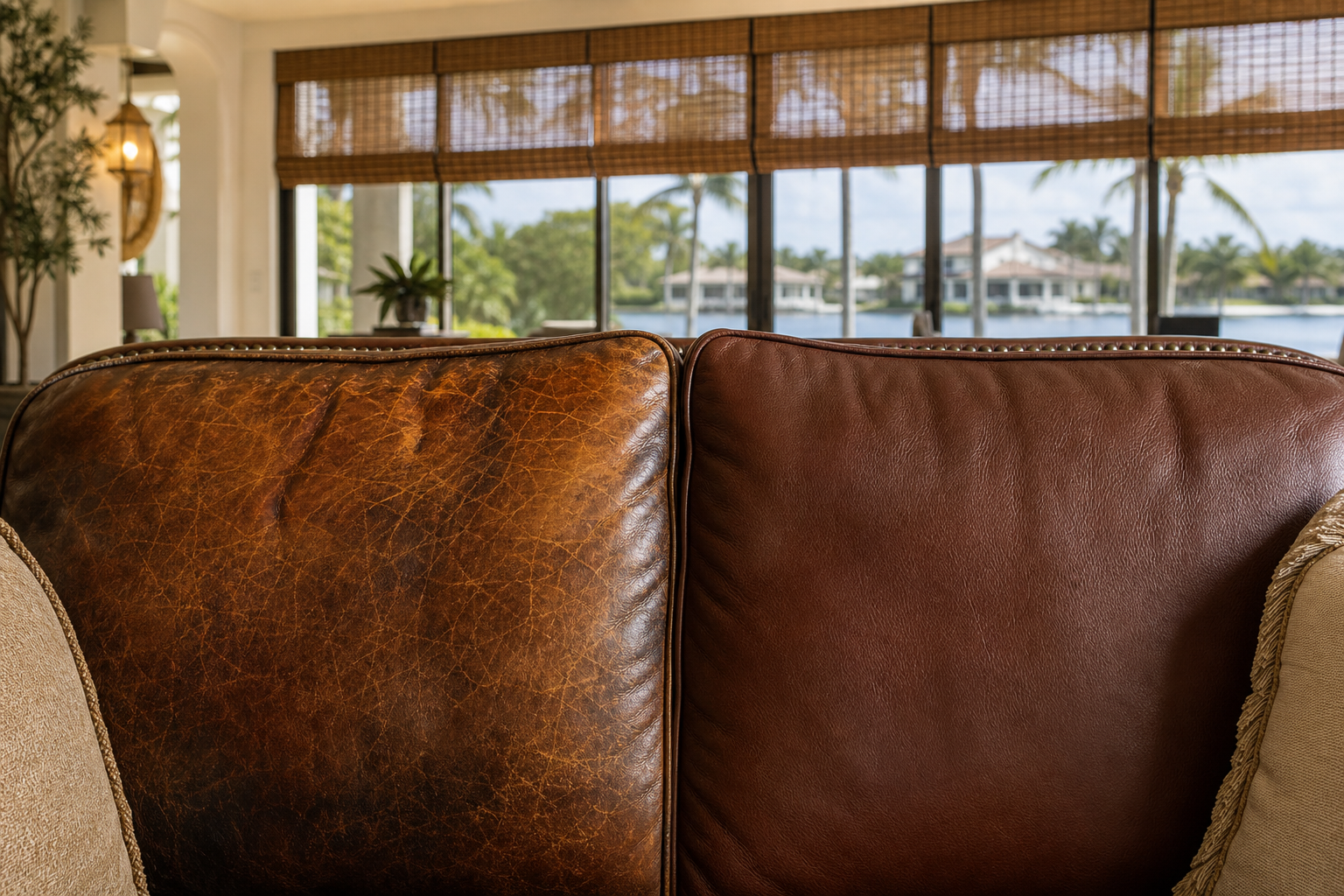
Leather changes with use. Over time, a once-uniform surface may develop darker areas, a softer hand, subtle variation in color, or a gentle sheen on frequently touched sections. These changes are often called patina. For many leather owners, patina is part of the material’s appeal—a visible record of careful use and age.
But not every change in appearance is character. Fading, sticky residue, cracking, peeling, stains, mold, mildew, and finish loss may indicate damage or neglected maintenance. In Southwest Florida, heat, intense sunlight, humidity, salt air, sunscreen, body oils, and seasonal-home conditions can accelerate these problems.
So, is patina damage—or character? The answer depends on the leather, the type of change, and whether the surface remains stable and serviceable. This guide explains how to evaluate aging leather and when professional leather cleaning, conditioning, protection, repair, or color restoration may be appropriate.
What Is Leather Patina?
Patina is the gradual change in appearance and feel that develops as leather is exposed to handling, friction, light, oils, and normal use. It is most noticeable on certain unfinished or lightly finished leathers, including many aniline and pull-up leathers, although protected leather can also show changes over time.
Natural patina may include:
- Subtle darkening in areas that receive frequent contact
- A soft, developed sheen on arms, handles, seats, or other high-touch areas
- Gentle variation in color and tone
- A more supple feel compared with newer leather
- Light creasing that is consistent with the shape and use of the item
Patina is not a specific finish or treatment applied to every leather product. It is a description of how leather may evolve. The same visual change can be attractive on one hide and concerning on another, depending on the original finish and the owner’s expectations.
When Patina Is Usually Considered Character
Patina is generally viewed as character when it is gradual, even, and stable. A well-developed surface may show signs of use without losing its protective function or structural integrity.
Healthy-looking signs of aging
Common examples include a mild deepening of color on a leather chair’s arms, a soft shine on a frequently handled bag, or gentle shading on the driver’s seat of a well-maintained vehicle. These changes may be entirely normal, particularly when they are not accompanied by tackiness, flaking, odor, or exposed fibers.
Some owners specifically choose leather because it develops this type of visual depth. In those cases, the goal is not to make the item look unused. The goal is to remove contamination, support the leather and finish appropriately, and preserve the appearance the owner values.
Character should still be maintained
Accepting patina does not mean ignoring maintenance. Dirt, sunscreen, perspiration, body oils, and salt residue can build up on frequently touched areas. If left in place, they may alter the finish and contribute to drying, discoloration, or surface deterioration.
Professional care can help preserve an aged appearance without automatically trying to return the leather to a factory-new look. The appropriate service depends on the material, finish, condition, and desired result.
When Patina Is Actually Damage
Damage is more likely when the change is localized, progressing, or associated with a weakened surface. The following signs should not be dismissed as ordinary character:
- Cracking, splitting, or exposed fibers
- Peeling, flaking, or bubbling finish
- Sticky, waxy, or unusually tacky areas
- Deep stains, dye transfer, or discoloration that does not blend naturally
- Fading caused by direct sun or ultraviolet exposure
- White salt deposits or rings after moisture exposure
- Mold or mildew odor and visible growth
- Water marks with hard edges or tide lines
- Loose stitching, torn seams, or weakened areas
- Color loss caused by abrasion, chemicals, or repeated rubbing
These conditions may require more than routine cleaning. Depending on the situation, the right solution could involve controlled cleaning, conditioning, protection, repair, color restoration, redye work, or a combination of services.
Patina vs. Common Types of Leather Damage
Appearance alone is not always enough to identify the problem. A darkened area could be attractive patina, accumulated oil, moisture staining, or finish change. The following comparisons can help with an initial assessment.
| What you see | More consistent with patina | More concerning for damage |
|---|---|---|
| Color change | Gradual and relatively even in high-use areas | Sharp-edged, blotchy, faded, or rapidly expanding |
| Surface feel | Soft, smooth, and stable | Sticky, brittle, rough, peeling, or cracking |
| Sheen | Subtle polish from handling | Greasy buildup or uneven loss of the original finish |
| Creasing | Light, natural folds that remain intact | Deep splits, open seams, or creases with cracking |
| Odor | Normal leather scent or no unusual odor | Musty, sour, chemical, or mildew-related odor |
This table is a starting point, not a substitute for an inspection. Leather types and finishes respond differently to moisture, solvents, friction, and products. A treatment that is suitable for protected leather may be inappropriate for an absorbent aniline hide.
Why Leather Type Matters
The distinction between patina and damage depends heavily on how the leather was made and finished.
Aniline and lightly finished leather
Aniline leather typically has a more natural appearance and may show variation, marks, and color development readily. Patina can be especially attractive on this type of leather, but the surface may also be more vulnerable to spills, oils, sunlight, and uneven cleaning.
Semi-aniline leather
Semi-aniline leather generally combines a natural look with some protective finishing. It may develop character while offering more resistance than an unfinished surface. Even so, excessive rubbing, unsuitable cleaners, and prolonged exposure to Florida sunlight can change its appearance.
Pigmented or protected leather
Pigmented or protected leather has a surface coating that creates more uniform color and helps shield the hide from everyday use. Changes on this leather may be less likely to represent traditional patina and more likely to involve soiling, abrasion, fading, finish wear, or coating damage.
For more detail, see Pigmented / Protected Leather: What It Is and How to Care for It.
Southwest Florida Conditions Can Blur the Difference
Leather in Fort Myers, Cape Coral, Naples, Bonita Springs, Estero, Marco Island, Sanibel, Captiva, Port Charlotte, Punta Gorda, Lehigh Acres, and surrounding communities is exposed to conditions that can accelerate surface changes.
- Sun and UV exposure: Direct light can fade color and weaken certain finishes, especially near windows, glass doors, vehicle windshields, and boat cabins.
- Humidity: Moisture in the air can contribute to musty odors and create more favorable conditions for mildew when ventilation is limited.
- Salt and water exposure: Coastal air, wet clothing, marine spray, and perspiration can leave residue that changes the surface over time.
- Sunscreen and body oils: These contaminants frequently affect headrests, armrests, steering wheels, seat bolsters, and furniture used near pools or beaches.
- Seasonal occupancy: Homes, boats, and vehicles that sit unused may develop concentrated dirt, odor, or humidity-related issues before the owner notices them.
These influences can create changes that look like patina but are actually buildup or finish deterioration. They can also make genuine patina more vulnerable if maintenance is postponed.
How to Evaluate Aging Leather Before Treating It
Before applying a cleaner, conditioner, recoloring product, or household remedy, evaluate the item carefully. A thoughtful assessment helps prevent turning a manageable condition into a larger restoration problem.
- Identify the item and use: Note whether it is residential furniture, automotive leather, marine upholstery, aircraft seating, a handbag, or another leather article.
- Look at high-contact areas: Check arms, seat bolsters, steering wheels, handles, headrests, and places where skin, clothing, sunscreen, or salt may contact the surface.
- Check the feel: Look for tackiness, brittleness, roughness, peeling, or exposed fibers.
- Inspect in natural light: Compare shaded and sun-exposed sections to identify fading or uneven color change.
- Consider odor and moisture: Mustiness, mildew odor, or signs of water intrusion suggest a contamination or moisture problem rather than simple patina.
- Define your goal: Decide whether you want to preserve the aged appearance, improve cleanliness and protection, repair damage, or restore a more uniform color.
Photographs can help document a condition, but they may not reveal finish type, tackiness, transfer, or structural weakness. When the leather is valuable, unusual, or visibly deteriorated, an in-person professional evaluation is the safer approach.
Should You Try to Remove Patina?
Not necessarily. Patina is often part of the desired appearance, particularly on premium furniture, luxury interiors, bags, and specialty leather goods. Removing it aggressively may create uneven color, strip finish, or produce a result that looks less natural than the original aging.
On the other hand, some owners prefer a cleaner, more uniform appearance. A professional can discuss whether cleaning, conditioning, protection, spot treatment, redye work, or broader restoration is appropriate. The goal should be agreed upon before work begins: preservation, refinement, or visual restoration.
It is also important to understand that cleaning and conditioning serve different purposes. Cleaning addresses soil and contamination, while conditioning is selected based on the leather and its needs. Learn more in Why Leather Cleaning and Conditioning Are Two Different Steps.
Common Mistakes That Can Turn Character Into Damage
- Using household disinfectants, alcohol, acetone, or harsh degreasers without confirming compatibility
- Scrubbing aggressively to remove a darkened area
- Applying oily products that leave residue or change the finish
- Testing an unfamiliar product in a visible location
- Using excess water on absorbent leather
- Leaving wet leather in a closed, humid vehicle, boat, or seasonal property
- Placing leather in direct sun or near intense heat to dry quickly
- Assuming every dark mark is patina and overlooking contamination or mildew
Home care should be gentle and limited to procedures appropriate for the specific leather. If a test area changes color, becomes tacky, or transfers pigment, stop and seek professional guidance.
When to Contact a Leather Professional
Professional help is appropriate when the leather has cracking, peeling, color loss, water damage, mold or mildew concerns, persistent odors, extensive staining, or a finish that is no longer stable. It is also worthwhile for high-value furniture, exotic or specialty leather, luxury vehicles, marine upholstery, private aircraft interiors, and commercial seating where an inconsistent repair could be costly.
Luxury Leather serves residential, automotive, marine, aviation, commercial, and medical-office customers throughout Southwest Florida. An evaluation can help determine whether the leather should be cleaned and maintained, protected against local environmental conditions, repaired, recolored, or restored while preserving as much of its original character as possible.
Frequently Asked Questions
Is patina always a good thing?
No. Patina can be a desirable sign of age, but discoloration, stickiness, cracking, peeling, odors, and finish loss indicate potential damage or contamination. The leather type and condition determine whether a change is character or a problem.
Can cleaning remove desirable patina?
It can, depending on the leather, cleaning method, and desired result. Professional care should begin with a discussion about whether you want to preserve the aged appearance or create a more uniform finish.
Does Florida humidity cause leather patina?
Humidity does not automatically create desirable patina. It can contribute to odor, mildew, moisture-related staining, and finish changes, especially in closed homes, boats, vehicles, and aircraft. These conditions should be evaluated separately from normal aging.
Can faded leather be restored?
Some color loss can be improved through professional redye or color restoration, while other cases may involve finish repair or replacement of damaged components. The feasibility depends on the leather, finish, extent of fading, and desired appearance.
How can I preserve patina without neglecting the leather?
Use a maintenance approach suited to the leather, limit direct sun, address spills and salt residue promptly, maintain ventilation in humid environments, and schedule professional care when the surface becomes contaminated or unstable.
Preserve the Character—Address the Damage
Patina can give leather depth, warmth, and individuality. Damage, however, can compromise the surface and become more difficult to correct when ignored. The best care strategy respects both: preserve the character you value while addressing contamination, finish deterioration, moisture exposure, and structural problems before they progress.
If you are unsure whether your leather shows natural patina or requires professional attention, contact Luxury Leather for a free consultation. Our team can help evaluate leather in homes, vehicles, boats, aircraft, medical offices, and commercial spaces throughout Southwest Florida.