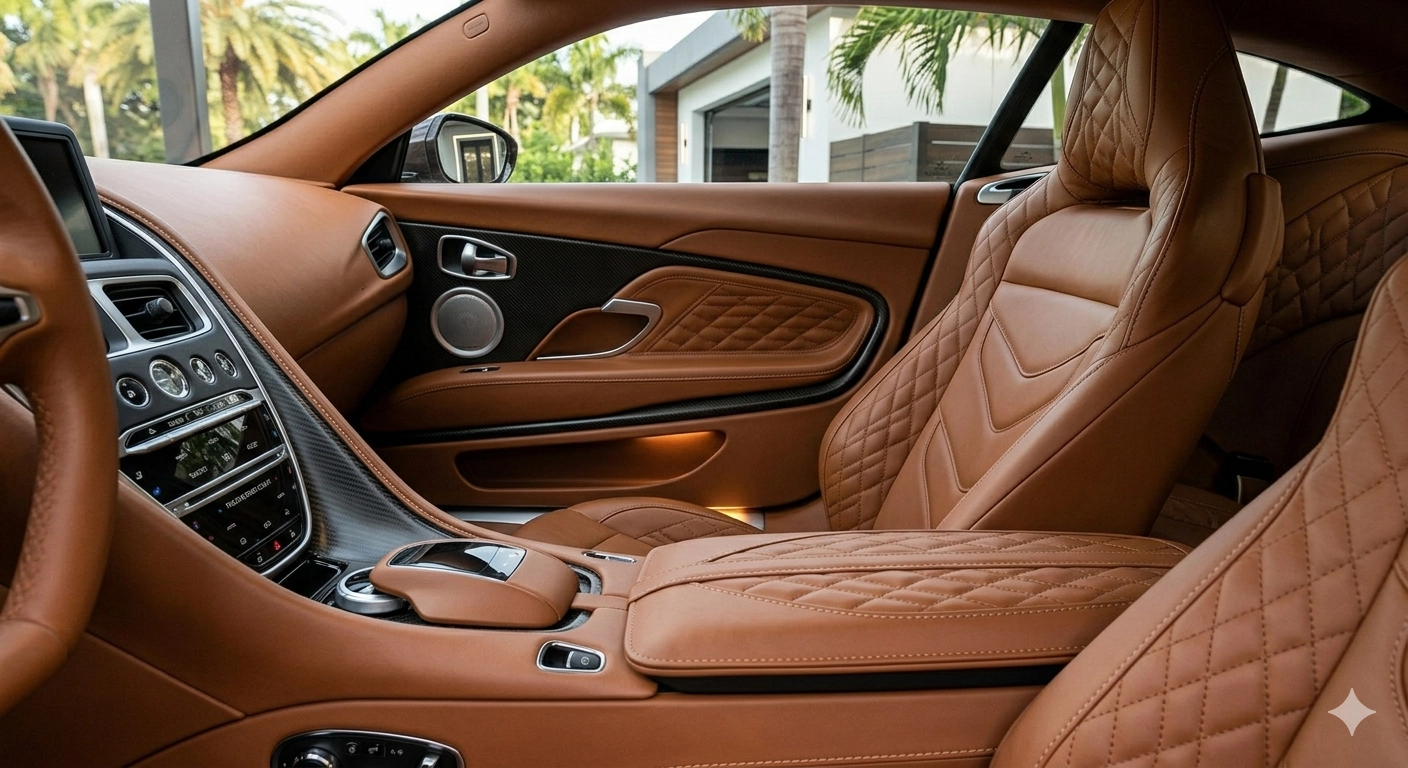
The interior of a modern luxury car is a masterpiece of ergonomics and material science. From the ultra-soft Nappa leather found in flagship sedans to the intricately quilted patterns of high-performance SUVs, these surfaces are designed to be both beautiful and functional. However, the complexity of modern automotive leather brings a new set of maintenance challenges that traditional cleaning methods simply cannot address.
The Challenge of Technology: Ventilated and Heated Seats
Most modern luxury interiors feature ventilated or heated seats. This means the leather is perforated with thousands of tiny holes to allow for airflow. While this increases comfort, it creates a significant risk during cleaning:
Debris Trapping: Dust, crumbs, and liquid spills can become trapped inside the perforations, leading to bacteria growth or odors.
Moisture Damage: Excess liquid cleaner can seep through the holes and damage the heating elements or electronic sensors beneath the hide.
Fiber Swelling: If the wrong chemicals are used, the edges of the perforations can swell, permanently ruining the smooth texture of the seat.
Protecting Light-Colored Interiors and Dye Transfer
Modern trends lean toward "Arctic White," "Ivory," and "Silver Grey" interiors. While stunning, these shades are magnets for dye transfer—a process where the indigo from blue jeans or the pigments from leather belts permanently "stains" the car’s upholstery.
Standard cleaning often fails to remove dye transfer once it has bonded. Professional restoration uses molecular cleaners that safely lift the foreign pigment without stripping the leather’s original protective topcoat. Following this with a ceramic-based leather sealant is essential to create a sacrificial layer that prevents future transfer.
The Precision of Quilted and Diamond Stitching
High-end brands now use complex stitching to define their luxury status. These seams are the weakest point of the interior; they are prone to fraying and can trap dirt that acts like sandpaper against the leather. Professional care involves using micro-tools to deep-clean the stitching and applying conditioners that keep the thread flexible, preventing it from snapping under the tension of daily use.
Conclusion
A modern car is a high-tech environment, and its leather deserves high-tech care. By understanding the specific needs of perforated, light-colored, and intricately stitched hides, you can ensure your vehicle’s cabin remains a pristine sanctuary. In the world of modern luxury, maintenance is not a chore—it is the art of preserving perfection.