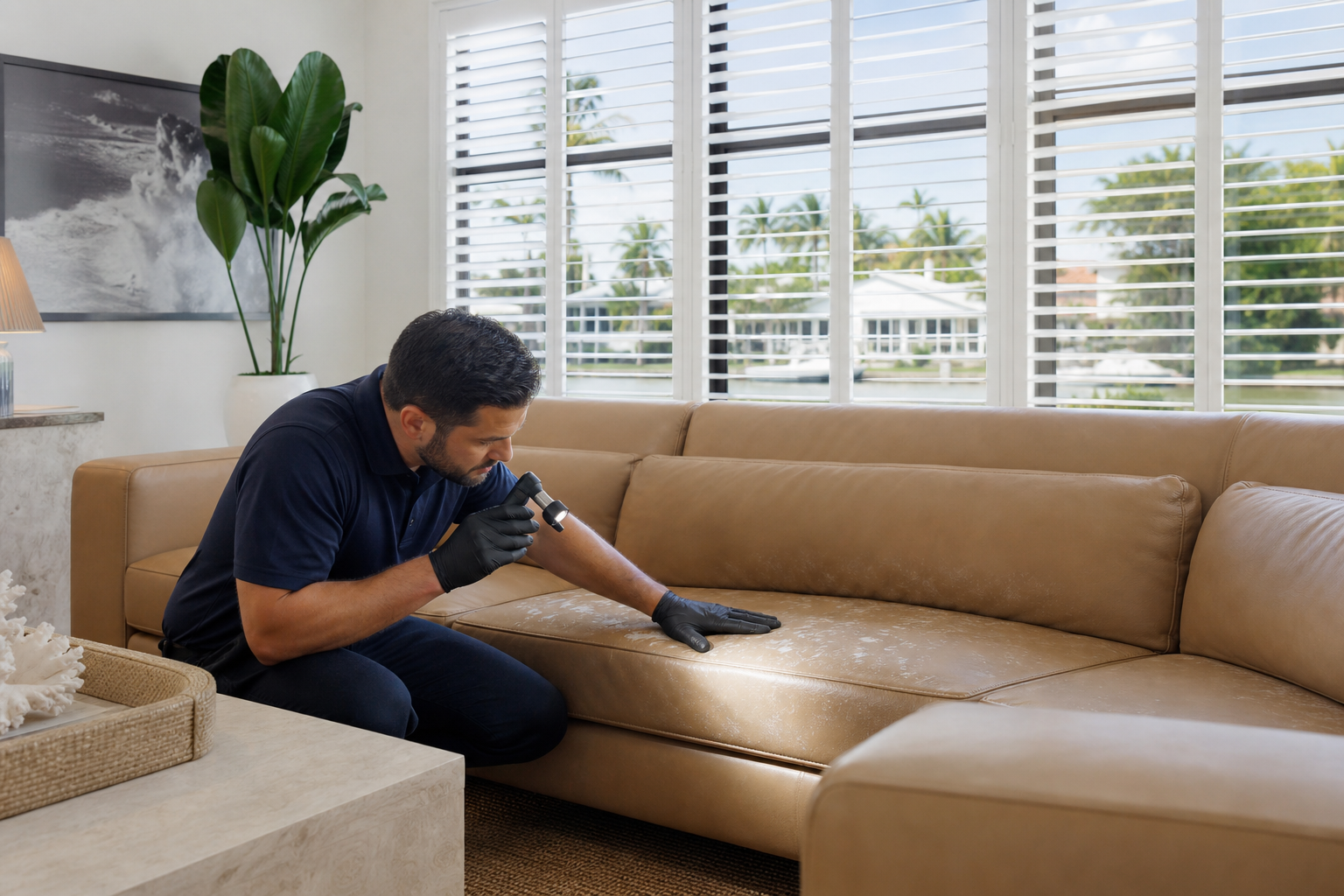
Mold and mildew on leather are common concerns in Southwest Florida, where high humidity, heat, moisture, and seasonal-home conditions can create a favorable environment for fungal growth. Leather furniture, vehicle interiors, boat seating, and other leather items may develop musty odors, discoloration, or visible spotting when moisture remains on or around the material.
Although a small surface issue may sometimes be addressed with careful cleaning, mold and mildew can also affect seams, cushions, backing materials, padding, and areas beneath or behind leather. Using the wrong cleaner or too much moisture may worsen the problem or damage the leather’s finish. Professional evaluation is especially important when growth is widespread, the odor persists, or the leather is valuable, delicate, or part of a larger upholstered item.
What Causes Mold and Mildew on Leather?
Mold and mildew need moisture, suitable temperatures, and an available source of organic material. Leather itself can support contamination when it has accumulated body oils, food residue, dirt, or other soils. The surrounding materials may also contribute, including foam, fabric backing, wood, dust, and padding.
Common causes in Southwest Florida include:
- High indoor humidity in homes, condos, vacation properties, and storage areas
- Leather furniture placed against damp walls or in poorly ventilated rooms
- Closed-up seasonal homes without consistent air circulation
- Wet swimsuits, towels, or clothing contacting leather seating
- Rain, marine spray, or spills that are not fully dried
- Condensation inside vehicles, boats, or aircraft
- Water intrusion, leaks, flooding, or elevated moisture in flooring and padding
- Organic residue such as food, sunscreen, body oils, and pet contamination
Florida’s warm conditions can allow a moisture problem to develop quickly, particularly in enclosed spaces. Leather may look dry on the surface while moisture remains in seams, under cushions, or within the materials beneath the upholstery.
How to Identify Mold or Mildew on Leather
Mold and mildew can appear in several ways. Visible growth may look like white, gray, green, yellow, or black spotting, although color alone does not identify the type of contamination. A musty odor is another warning sign, especially when it returns after the leather has been wiped.
Look for:
- Powdery, fuzzy, or irregular spots on the leather surface
- Discoloration around seams, welts, piping, or stitching
- Musty odors from cushions, vehicle seats, or enclosed compartments
- Growth on the underside of cushions or beneath removable covers
- Recurring spotting after routine cleaning
- Stiffness, tackiness, cracking, or finish changes associated with moisture exposure
Some surface marks may be dirt, salt residue, dye transfer, or finish deterioration rather than mold. When the cause is unclear, aggressive cleaning can create additional damage. An experienced leather-care professional can assess the material, finish, location, and extent of the problem before recommending a treatment approach.
Can Mold and Mildew Be Removed from Leather?
In some cases, mold or mildew can be removed from the exposed leather surface. However, successful treatment depends on more than wiping away visible spots. The source of moisture must be addressed, and affected areas beneath the surface may require attention.
Results may vary based on:
- The type and finish of the leather
- How long the contamination has been present
- Whether the leather is protected, aniline, nubuck, suede, or unfinished
- Whether mold has reached seams, padding, or backing materials
- Whether the leather has already been treated with household chemicals
- The severity of odor, staining, finish damage, or structural deterioration
Cleaning may remove surface contamination without fully correcting staining or odor in underlying materials. In other cases, the leather finish may need conditioning, color work, repair, or restoration after cleaning. Mold-related leather care should be approached as both a cleaning and moisture-control issue.
What to Do When You Find Mold on Leather
1. Separate the affected item when practical
If possible, move the affected cushion, chair, vehicle, or other item away from clean leather and porous household materials. Avoid spreading loose contamination through brushing, shaking, or aggressive vacuuming indoors.
2. Identify and correct the moisture source
Check for leaks, condensation, wet flooring, poor ventilation, closed compartments, or high humidity. In a seasonal property, inspect the room and surrounding furniture rather than focusing only on the visible spot. Cleaning without correcting the moisture source may allow the problem to return.
3. Allow the area to become appropriately dry
Improve air circulation and reduce excess humidity without applying intense heat directly to the leather. Hair dryers, heaters, and prolonged direct sun can dry the leather unevenly, affect its finish, or contribute to stiffness and cracking.
4. Avoid experimenting with strong household products
Bleach, ammonia, disinfecting sprays, alcohol-based products, vinegar mixtures, abrasive powders, and other household cleaners may discolor leather, weaken its finish, or leave residues. Even products marketed for general surfaces may not be appropriate for leather. For more information, see why household cleaners can damage leather.
5. Arrange a professional assessment when the issue is persistent or extensive
Professional help is appropriate when the odor remains, spotting returns, multiple surfaces are affected, the item has been exposed to water, or the leather is part of a luxury vehicle, boat, aircraft, or high-value furnishing. A technician can evaluate the material and determine whether cleaning, conditioning, protection, repair, or restoration is suitable.
Why DIY Mold Cleaning Can Damage Leather
Leather is not one uniform material. Its surface may have a protective coating, or it may be more absorbent and sensitive to moisture and chemicals. A cleaning method that appears successful on protected leather may permanently darken or mark aniline leather, nubuck, or suede.
Common DIY mistakes include:
- Soaking the leather in an attempt to flush out contamination
- Scrubbing aggressively and removing surface color or finish
- Applying bleach or disinfectants without testing compatibility
- Using steam or high heat near leather upholstery
- Cleaning only the visible surface while ignoring seams and cushion interiors
- Applying conditioner before the leather is clean and adequately dry
- Sealing in moisture with an unsuitable product
Leather cleaning and conditioning are separate steps. Conditioning should not be used to cover a musty odor or replace proper contamination removal. Once the leather has been appropriately cleaned and dried, a professional can determine whether conditioning or protection is beneficial for that specific finish. Learn more about why leather cleaning and conditioning are two different steps.
Leather Types That Need Special Care
Protected or pigmented leather
Protected leather has a surface finish designed to provide a degree of resistance to everyday soils and wear. Mold can still develop on or around it, particularly in seams, creases, and areas exposed to moisture. Cleaning must be controlled so the finish is not dulled, stripped, or left with residue. Our guide to pigmented and protected leather explains why identifying the finish matters.
Aniline and unfinished leather
Aniline leather has a more natural appearance and may absorb moisture and cleaning solutions more readily. Staining, darkening, and color changes can occur if it is over-wetted. Professional evaluation is recommended before treating suspected mold or mildew on these surfaces.
Nubuck and suede
Nubuck and suede have a textured surface that requires specialized tools and methods. Household cleaners, excessive brushing, and moisture can alter the nap or create permanent marks. These materials should not be treated like smooth finished leather.
Mold and Mildew on Leather Furniture
For sofas, chairs, recliners, and sectional furniture, inspect more than the exposed seating area. Remove cushions if the design allows and check undersides, zipper areas, platform decks, and nearby flooring. Mold-related odor may originate in cushion inserts, fabric backing, or padding rather than the leather itself.
Furniture in Southwest Florida homes may be especially vulnerable when rooms remain closed for long periods or when air conditioning is not operating consistently. Keep furniture away from damp walls, maintain airflow around and beneath pieces, and address leaks or condensation promptly. A professional leather cleaning service can evaluate the upholstery and help determine whether the problem is limited to the leather surface or involves additional components.
Mold and Mildew on Automotive, Marine, and Aviation Leather
Enclosed vehicles and vessels can retain heat and moisture, creating conditions for musty odors and visible growth. Convertible interiors, boat cabins, storage compartments, and aircraft seating may be affected by rain, humidity, wet gear, saltwater exposure, or inadequate ventilation.
For automotive and marine leather, inspect seat seams, storage areas, flooring, and areas beneath removable cushions. Boat owners should also consider moisture below seating and within enclosed compartments. Aviation interiors require careful material identification and controlled cleaning because upholstery may include different leather types, coatings, fabrics, and adjacent components.
Routine professional care can help identify developing contamination before it becomes a larger restoration concern. The appropriate schedule depends on use, exposure, storage conditions, and the condition of the leather.
How to Prevent Mold and Mildew on Leather in Southwest Florida
- Control indoor humidity and maintain reliable air circulation.
- Open and inspect seasonal properties regularly when practical.
- Keep leather away from known leaks, damp walls, and wet flooring.
- Dry spills, rainwater, swimsuits, towels, and marine spray promptly.
- Do not store damp items against leather seats or furniture.
- Leave appropriate space around furniture to support airflow.
- Inspect seams, undersides, cushions, and enclosed compartments.
- Remove sunscreen, body oils, food residue, and other soils before they accumulate.
- Use only leather-care products appropriate for the specific leather finish.
- Schedule professional cleaning when leather is heavily used or exposed to demanding conditions.
Regular maintenance is particularly valuable for vacation homes, waterfront properties, boats, luxury vehicles, and other items that may be closed up or exposed to changing moisture levels. You can also review how often leather should be professionally cleaned in Southwest Florida.
When to Call a Professional Leather Care Specialist
Contact a professional when mold or mildew covers multiple areas, the odor persists after drying, the item has experienced water damage, or the leather has become stained, brittle, tacky, or discolored. Professional care is also a sensible choice for delicate leather, luxury furnishings, exotic vehicles, yachts, aircraft, and commercial interiors where an incorrect cleaning method could be costly.
Luxury Leather can assess the condition of the leather and recommend a practical service plan, which may include cleaning, conditioning, protection, repair, redye, or restoration. Treatment is available for residential, automotive, marine, aviation, commercial, and medical-office leather throughout Southwest Florida.
Frequently Asked Questions
Can I use bleach to remove mold from leather?
Bleach is not a generally safe choice for leather. It may damage the finish, alter the color, weaken the material, and leave residues. The appropriate treatment depends on the leather type and the extent of contamination.
Does sunlight kill mold on leather?
Direct sunlight may dry some surface moisture, but it is not a complete mold-removal solution. Prolonged sun exposure can fade leather and contribute to drying or finish damage. The moisture source and affected materials still need to be addressed.
Why does the musty smell return after cleaning?
A returning odor may indicate moisture or contamination in seams, cushion padding, backing materials, flooring, or nearby surfaces. Wiping the visible leather may not reach the source.
Can mold permanently stain leather?
Yes. Mold and mildew may leave discoloration or contribute to finish changes, especially when contamination has remained for an extended period or the leather has been exposed to moisture and unsuitable cleaners. Cleaning may not restore the original appearance in every case.
Should I condition leather after removing mildew?
Conditioning should only be considered after the leather has been properly cleaned and dried. The correct approach depends on the finish and current condition of the material. Conditioner should not be used to conceal an unresolved odor or moisture problem.
Get Professional Help with Mold and Mildew on Leather
Mold and mildew on leather should be addressed carefully, particularly in Southwest Florida’s humid coastal environment. Early evaluation can help protect the leather’s appearance and identify whether moisture has affected cushions, seams, padding, or surrounding materials.
Luxury Leather serves Fort Myers, Cape Coral, Naples, Bonita Springs, Estero, Marco Island, Sanibel, Captiva, Lehigh Acres, Punta Gorda, Port Charlotte, and surrounding Southwest Florida communities. Contact us for a free consultation to discuss your leather cleaning, protection, repair, or restoration needs.