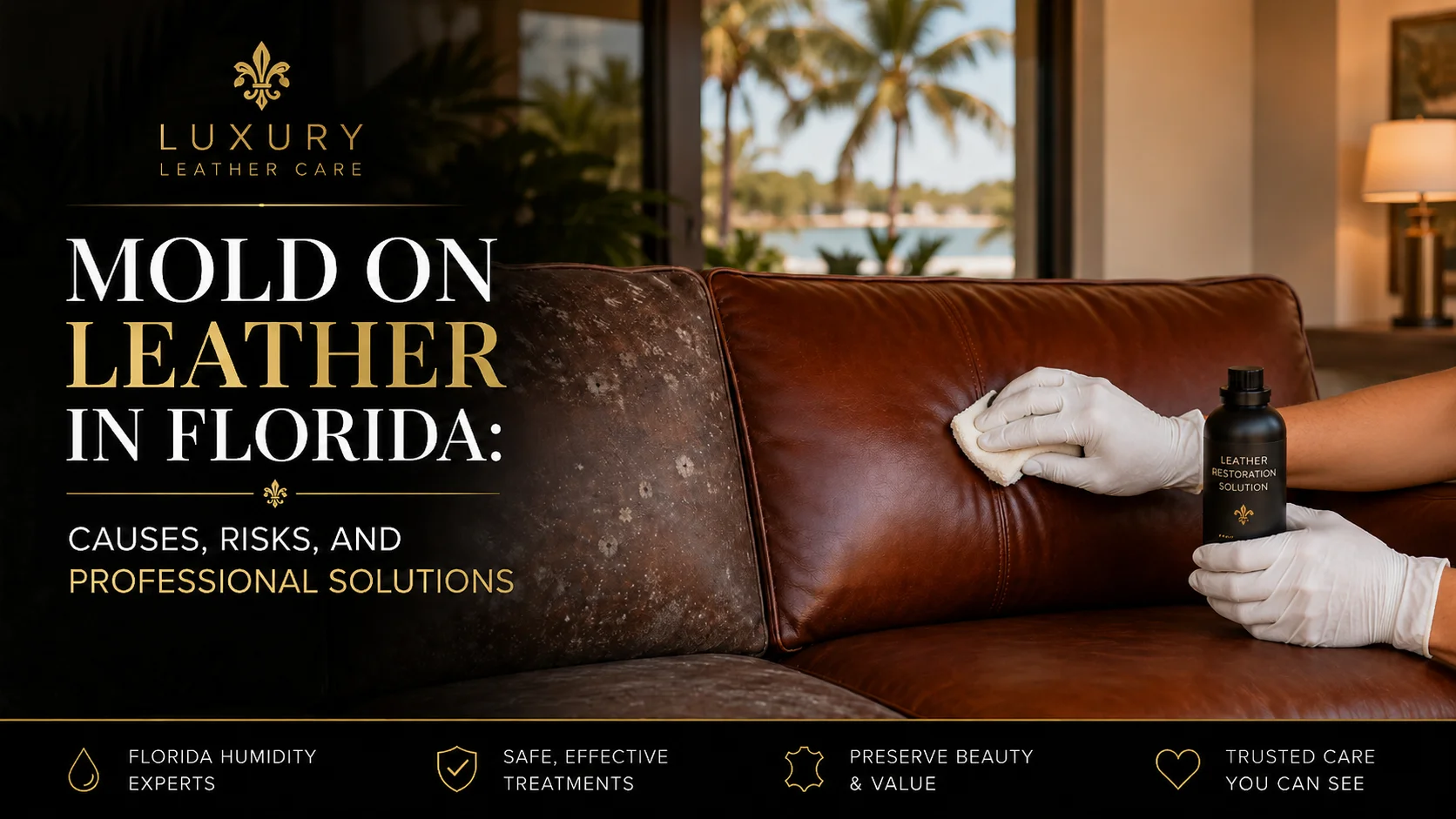
Florida is famous for its sunshine, beautiful coastlines, and pristine waters. But for luxury asset owners, the state is also known for a less welcome characteristic: relentless, suffocating humidity.
If you own a luxury vehicle, a yacht, or high-end leather furniture in the Sunshine State, you’ve likely faced—or are currently fighting—a silent enemy: mold.
When mold takes hold of premium leather, it’s not just a minor cosmetic issue. It is a biological invasion that can permanently ruin the material and compromise your health. Here is a breakdown of why this happens, the hidden dangers, and how to solve it properly.
The Perfect Storm: Why Florida is a Mold Haven
Mold spores are everywhere in the air, completely invisible to the naked eye. However, to wake up and start growing, they need three things: moisture, warmth, and a food source. Florida provides all three on a silver platter.
High Relative Humidity: Mold thrives when the relative humidity (RH) rises above 60%. In Florida, coastal cities frequently experience average humidity levels between 70% and 90%.
Trapped Heat: Inside a closed car parked in the sun or a cabin of a docked yacht with the A/C turned off, temperatures can skyrocket, turning the space into a virtual greenhouse.
The Ideal Food Source: Leather is a natural, porous organic material. It retains microscopic amounts of moisture and is rich in nutrients (fats, oils, and proteins used during the tanning process) that mold loves to consume.
The Risks: More Than Skin Deep
Leaving mold untreated on your leather assets carries severe consequences, both for your property and your well-being.
1. Structural Destruction of the Leather
Mold doesn't just sit on top of the leather; it eats into it. As the fungi grow, they feed on the essential oils that keep the leather supple. Once these oils are depleted, the leather becomes brittle, starts to crack, and loses its structural integrity. Furthermore, the metabolic byproducts of mold can cause permanent discoloration and staining that standard cleaners cannot remove.
2. Health Hazards
When you turn on your car's climate control or step into an infested cabin, mold spores become airborne. Inhaling these spores can trigger severe allergic reactions, respiratory irritation, coughing, sinus congestion, and can be particularly dangerous for individuals with asthma or compromised immune systems.
Why DIY Solutions Often Fail on Luxury Leather
The internet is full of quick fixes, such as rubbing alcohol or heavy doses of vinegar. While these might kill surface mold on cheap synthetic materials, they can be disastrous for premium leather.
Warning: Rubbing alcohol strips away the factory topcoat and dyes of high-end leather, leaving it exposed, dry, and ruined. Vinegar, if applied improperly, can oversaturate the leather, driving the moisture deeper into the padding below and actually accelerating future mold growth.
Furthermore, wiping down the surface only removes what you can see. If the spores have penetrated the grain or settled into the foam underneath the seat, the mold will simply return the next time the humidity spikes.
The Professional Solution: Restoration and Prevention
Eliminating mold permanently from high-end leather requires a precise, non-invasive protocol that eradicates the fungi without altering the texture, color, or aroma of the original material.
1.Inspection and HEPA Vacuuming:Step 1.The area is thoroughly inspected. A specialized vacuum equipped with a HEPA filter is used to safely extract loose, dry spores from the surface and seams without spreading them into the air.
2.Deep Disinfection and Remediation:Step 2.A pH-neutral, professional-grade antimicrobial cleaner is meticulously worked into the leather grain. This kills active mold colonies and neutralizes live spores deep within the fibers without stripping the leather's natural oils.
3.Deep Conditioning and Restoration:Step 3.Once dry, the leather is treated with premium conditioners to replace the oils consumed by the mold. This restores the leather's original suppleness, rich texture, and depth of color.
4.Advanced Environmental Protection:Step 4.A micro-thin, breathable protective barrier is applied to seal the surface. Combined with proper humidity management (like using dehumidifiers or keeping the climate control active), this prevents future spores from finding a foothold.
Protect Your Investment
In Florida, maintaining luxury leather isn't just about looks—it’s an ongoing battle against the elements. If you catch a musty smell or notice a fine white or greenish powder forming on your seats or interiors, act quickly. Treating it early preserves the value of your asset and ensures a safe, clean environment for you and your passengers.