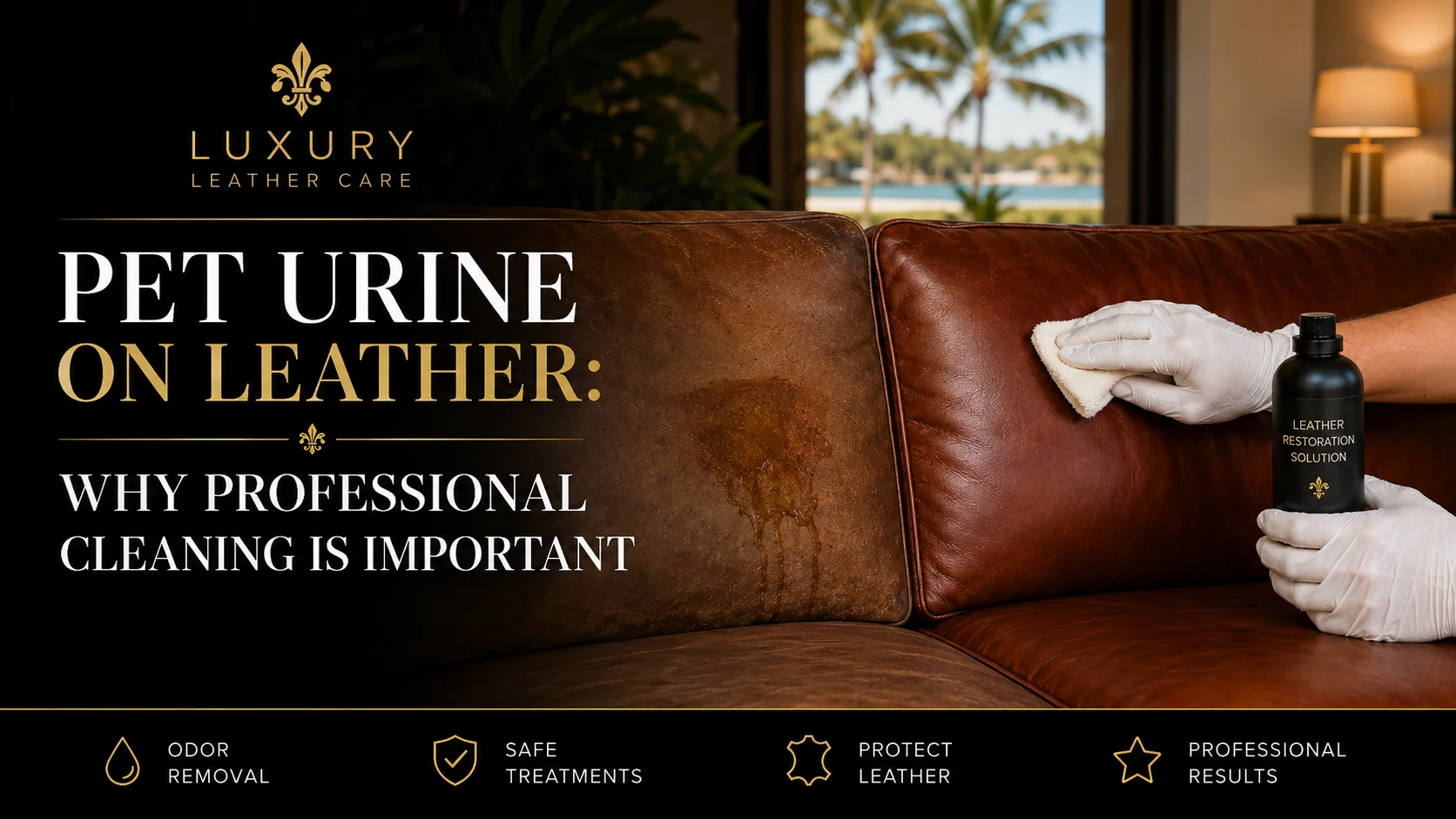
We love our pets, but accidents happen. Whether you have a new puppy training in the living room or a stressed cat sneaking into a luxury vehicle, a pet urine mishap on high-end leather is an immediate emergency.
Many owners instinctively reach for common household cleaners, dish soap, or generic carpet enzyme sprays. However, treating premium leather like a fabric carpet is a critical mistake. Because leather is a highly delicate, organic material, pet urine inflicts unique chemical damage that demands professional intervention. Here is why you cannot afford to wait—or try to fix it yourself.
The Chemical Nightmare: Acid to Alkaline
To understand why urine destroys leather so quickly, you have to look at the chemistry of what happens as it dries.
The Acidic Phase: When first deposited, pet urine is typically acidic. Because premium leather is porous, it instantly absorbs this liquid, drawing it deep into the grain and down into the structural foam padding beneath.
The Alkaline Shift: As the water content evaporates, the urine decomposes. Bacteria break down the urea, converting it into ammonia. This shifts the pH from acidic to highly alkaline.
This sudden, drastic chemical shift is incredibly destructive. The alkaline ammonia actively dissolves the factory topcoat, strips away the protective dyes, and breaks down the natural proteins and tanning bonds holding the leather fibers together.
The Hidden Dangers of DIY Quick Fixes
When faced with a sudden stain, a natural reaction is to scrub the area or douse it in water and vinegar. On high-end leather, this usually makes the problem worse:
The Sub-Floor Trap: Wiping down the surface only tackles 10% of the issue. The real damage is occurring in the foam padding or backing material underneath. Adding liquid topical cleaners simply pushes the dissolved urine deeper into the cushion, trapping the odor permanently.
Furthermore, popular retail enzyme cleaners designed for carpets are often too harsh for fine leathers. They can over-saturate the hide, strip the essential oils that keep the material soft, and cause the leather to dry out, warp, and crack like cardboard.
Why Professional Restoration is Critical
Professional leather technicians don’t just mask the smell or clean the surface; they understand the molecular structure of the material. A professional remediation process typically follows a precise, corrective sequence to save the asset.
1.Sub-Surface Extraction:Step 1.Specialized low-moisture extraction tools pull the embedded liquid out from deep within the leather grain and underlying foam, removing the bulk of the contaminant before it can dry completely.
2.Uric Acid Neutralization:Step 2.Technicians apply specific, pH-balanced counter-agents formulated strictly for leather. These break down the resilient uric acid crystals that cause the persistent "ammonia smell," completely neutralizing the odor at its source.
3.Fiber Conditioning and Rehydration:Step 3.Because urine strips the natural fats and tanning agents, the leather must be rehydrated. Specialized fatliquors and premium conditioners are applied to restore flexibility, preventing the leather from hardening and cracking.
4.Color Correction and Refinishing:Step 4.If the ammonia has bleached or stained the original finish, professionals carefully prep the surface, mix custom-matched dyes, and spray a new topcoat to completely restore the original look and luster.
Time is the Crucial Factor
When it comes to pet urine on fine leather, time is your greatest enemy. The longer the liquid sits, the deeper it penetrates, and the more chemical damage it causes to the dyes and fibers. If an accident happens on your luxury furniture, automotive interior, or yacht upholstery, skip the home remedies. Reaching out to a professional immediately is the only guaranteed way to save your investment, eliminate the odor completely, and restore the flawless look you expect.