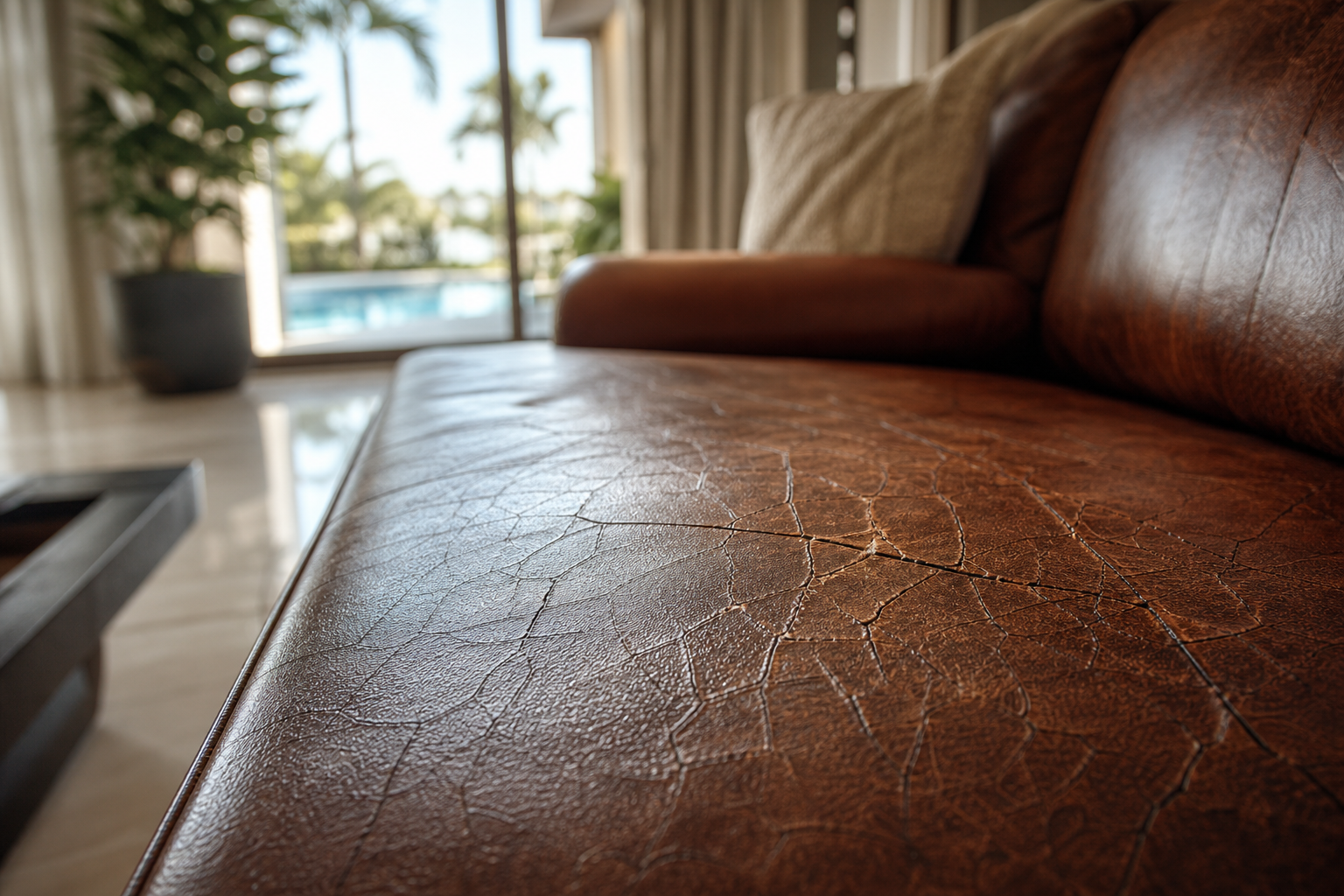
Leather cracking is one of the most common signs that a leather surface needs professional attention. Cracks may begin as small lines, dry patches, or rough areas before progressing into peeling, splitting, or exposed substrate. Once the leather itself has separated, routine cleaning and conditioning alone cannot reverse the damage.
Understanding why leather cracks can help homeowners, vehicle owners, boat owners, and businesses protect valuable leather before the problem becomes more extensive. In Southwest Florida, heat, strong sunlight, humidity, salt air, body oils, sunscreen, and seasonal property conditions can all affect how leather ages.
What Causes Leather to Crack?
Leather cracks when it loses flexibility and the surface can no longer move comfortably with normal use. Several factors may contribute to that loss of flexibility, and cracking is often the result of more than one issue.
Loss of moisture and flexibility
Leather is a natural material that needs appropriate care to remain supple. Over time, repeated use, exposure to heat, and inadequate maintenance can leave the surface dry and less flexible. When leather bends, compresses, or stretches while in that condition, fine lines may develop and deepen.
Conditioning can support the flexibility of some finished leather, but it is not a substitute for cleaning, finish care, or professional restoration. Applying more conditioner is not always better, especially when the leather is coated, heavily soiled, damaged, or made from a material that should not be treated with a general-purpose product.
Sunlight and heat exposure
Southwest Florida leather is often exposed to intense sunlight and elevated temperatures. A leather sofa placed near an uncovered window, a vehicle parked outside, or a boat seat exposed to direct sun may experience accelerated drying and finish deterioration.
Ultraviolet exposure can also fade color and weaken the surface finish. As the finish becomes brittle or begins to wear away, the underlying leather may be more vulnerable to cracking, especially in high-use areas such as driver seats, armrests, sofa cushions, and boat seating.
Body oils, perspiration, and sunscreen
Leather absorbs or holds onto residues from regular contact. Body oils, perspiration, hair products, and sunscreen can build up on seating and touch points. In Florida’s warm climate, these substances may remain on a surface longer and contribute to soil accumulation, discoloration, and finish wear.
Residue does not always make leather feel dry immediately. In some cases, it softens or weakens the finish first. Repeated friction can then wear through the affected area, leaving the leather more susceptible to surface damage and cracking.
Improper cleaning products
Household cleaners may contain solvents, alcohols, detergents, oils, or other ingredients that are not appropriate for a particular leather finish. Some products strip protective coatings, leave a sticky residue, darken the surface, or interfere with later restoration work.
Wipes and multipurpose sprays can be especially problematic when used repeatedly. For more information, see why household cleaners can damage leather.
Age and repeated flexing
Leather naturally changes with age. Areas that are sat on, folded, rubbed, or handled every day undergo more movement than surrounding surfaces. A driver’s seat bolster, for example, may experience repeated compression and friction each time someone enters or exits the vehicle.
Even well-maintained leather can eventually show wear. Proper cleaning and protection may slow deterioration, but no maintenance program can eliminate the effects of age and daily use.
Low-quality or heavily coated materials
Not every material sold as “leather” has the same construction. Bonded leather, coated splits, synthetic leather, and heavily pigmented leather may respond differently to heat, moisture, cleaning, and flexing. In some cases, what appears to be cracking is actually the breakdown or peeling of a surface coating rather than a crack in the hide itself.
Identifying the material and finish is an important first step. The correct restoration approach depends on whether the damage affects the finish, the grain surface, the underlying leather, or a manufactured coating.
What Does Leather Cracking Look Like?
Early cracking can be subtle. Watch for changes such as:
- Fine lines that appear in frequently used areas
- A dry, rough, or less flexible feel
- Small areas where color has begun to wear away
- Peeling or flaking on coated leather
- Deep creases that remain visible after the surface is no longer under pressure
- Exposed lighter-colored material beneath the original finish
- Splits, holes, or tears along seams and high-friction areas
Surface lines do not always mean the leather is beyond repair. However, aggressive scrubbing, sanding, or repeated application of untested products can make a manageable problem more difficult to restore.
Can Cracked Leather Be Repaired?
The answer depends on the depth, location, material, and condition of the surrounding finish. A professional assessment can distinguish between surface wear, finish failure, genuine leather cracking, and structural damage.
Minor surface wear
When damage is limited to the finish, a professional may be able to clean the area, prepare the surface, restore color, and apply an appropriate finish. The goal is to improve appearance while preserving as much of the original material as possible.
Deep cracks and exposed substrate
When cracks extend into the leather or reveal the material beneath the surface, restoration may involve carefully preparing the damaged area, filling or rebuilding portions of the surface where appropriate, matching the color, and refinishing the affected section. The result depends on the leather’s condition and how much material remains intact.
Tears, splits, and structural damage
A split seam or tear may require repair rather than surface restoration alone. In some cases, the damaged section can be stabilized or repaired. In others, replacing a panel or coordinating with an upholstery professional may be the more suitable option.
Restoration is not the same as making damaged leather look brand new in every situation. A careful evaluation should explain what can reasonably be improved, what may remain visible, and which approach best protects the item’s value and usability.
Why Conditioning Alone May Not Fix Cracked Leather
Leather conditioners are designed to support the feel and flexibility of suitable leather surfaces. They cannot restore missing material, reconnect separated fibers, replace a failed coating, or repair a tear.
Applying conditioner over dirt, body oils, sunscreen, or deteriorated finish may also trap contamination or create an uneven appearance. For this reason, professional care generally begins with identifying the leather and its condition rather than immediately applying a product.
If you are unsure whether a leather finish is damaged or simply worn, our guide to restoring a leather finish explains some of the factors that affect the process.
How to Prevent Leather from Cracking
Prevention is most effective when it combines appropriate cleaning, controlled exposure, and timely professional care.
Keep leather away from prolonged direct sun
Use window treatments, shade structures, or covered parking where practical. Rotate furniture when appropriate so one section is not exposed to direct sunlight continuously. In vehicles, sunshades can reduce heat and light exposure when the vehicle is parked.
Clean contamination before it builds up
Regular professional cleaning helps remove soil and residues that can contribute to finish wear. This is especially important for high-contact leather in homes, cars, boats, aircraft, medical offices, and commercial settings.
Florida homes and seasonal properties may need particular attention after periods of vacancy. Closed, humid interiors can develop musty conditions or mold and mildew concerns. Our article on mold and mildew on leather covers why early assessment matters.
Use products made for the specific leather
Do not assume that a product suitable for a smooth finished sofa is appropriate for an aniline chair, automotive leather, marine vinyl, suede, nubuck, or a coated synthetic material. If a product is used at home, test it first in an inconspicuous area and follow the manufacturer’s care guidance.
Limit excess heat and moisture
Do not use a hair dryer, heat gun, or other direct heat source to dry wet leather. Excessive heat can tighten, harden, or distort the material. Blot spills carefully and allow the surface to dry under normal indoor conditions unless a professional advises otherwise.
Address early changes promptly
Small cracks, fading, roughness, or finish loss are easier to evaluate before the damage spreads across a larger area. Early service may also help identify the source of the problem, such as excessive sun exposure, an unsuitable cleaner, or a recurring contamination issue.
Southwest Florida Conditions That Affect Leather
Leather care in Fort Myers, Cape Coral, Naples, Bonita Springs, Estero, Marco Island, Sanibel, Captiva, Lehigh Acres, Punta Gorda, Port Charlotte, and nearby communities often requires consideration of the local environment.
- Heat: Hot interiors can accelerate drying and increase the temperature of leather surfaces.
- Ultraviolet exposure: Strong sun can fade color and weaken certain finishes.
- Humidity: Moist air can contribute to residue, odor, and mold or mildew concerns when ventilation is poor.
- Salt air and water: Coastal exposure may leave deposits on marine, automotive, and outdoor-adjacent leather surfaces.
- Sunscreen and body oils: Frequent contact can cause buildup on seats, arms, steering wheels, and other touch points.
- Seasonal occupancy: Homes, boats, and vehicles that sit unused may not receive the regular cleaning and inspection needed to catch early damage.
These conditions do not guarantee that leather will crack, but they can make a consistent maintenance plan especially valuable.
When Should You Call a Leather Professional?
Professional evaluation is recommended when cracks are deep, the surface is peeling, the material is discolored, the leather has an unusual finish, or a valuable item is involved. It is also wise to seek guidance before using a strong cleaner, sanding a damaged section, or attempting a color repair.
Luxury Leather can assess leather in residential furniture, vehicles, boats, aircraft, commercial spaces, and medical offices. Depending on the condition, service may include cleaning, conditioning, protection, repair, redye and color restoration, or broader restoration work.
Frequently Asked Questions About Cracked Leather
Does dry leather always crack?
No. Dryness can contribute to cracking, but sunlight, heat, contamination, improper products, age, repeated flexing, and the type of leather or coating also matter.
Can olive oil or another household oil prevent leather from cracking?
Household oils are not a reliable solution for leather care. They may darken the surface, leave residue, attract soil, or interfere with the finish. Use only products appropriate for the specific leather, and seek professional guidance when the material is valuable or already damaged.
Can cracked leather be made smooth again?
Some surface damage can be improved through professional cleaning, preparation, color restoration, and refinishing. Deep cracks, missing material, peeling coatings, and structural tears may remain partly visible or require a more extensive repair approach.
How can I stop leather seats from cracking in Florida?
Reduce prolonged sun exposure, clean residues such as body oils and sunscreen, avoid unsuitable household cleaners, and arrange periodic professional inspection and care. Keeping a vehicle shaded or covered when possible can also help limit heat and UV exposure.
Is peeling leather the same as cracked leather?
Not always. Peeling may indicate that a surface coating or bonded material is breaking down, while cracking may involve the leather itself. A professional assessment can help determine which material has failed and what repair options are realistic.
Protect Your Leather Before Cracks Spread
Cracked leather is often a sign that the surface has experienced more stress than its finish or material could withstand. Identifying the cause, avoiding damaging home remedies, and addressing early wear can help preserve furniture, vehicle interiors, marine seating, and other valuable leather surfaces.
For leather care in Southwest Florida, contact Luxury Leather for a free consultation. Our team can help determine whether your leather needs cleaning, conditioning, protection, repair, redye and color restoration, or a more comprehensive restoration plan.