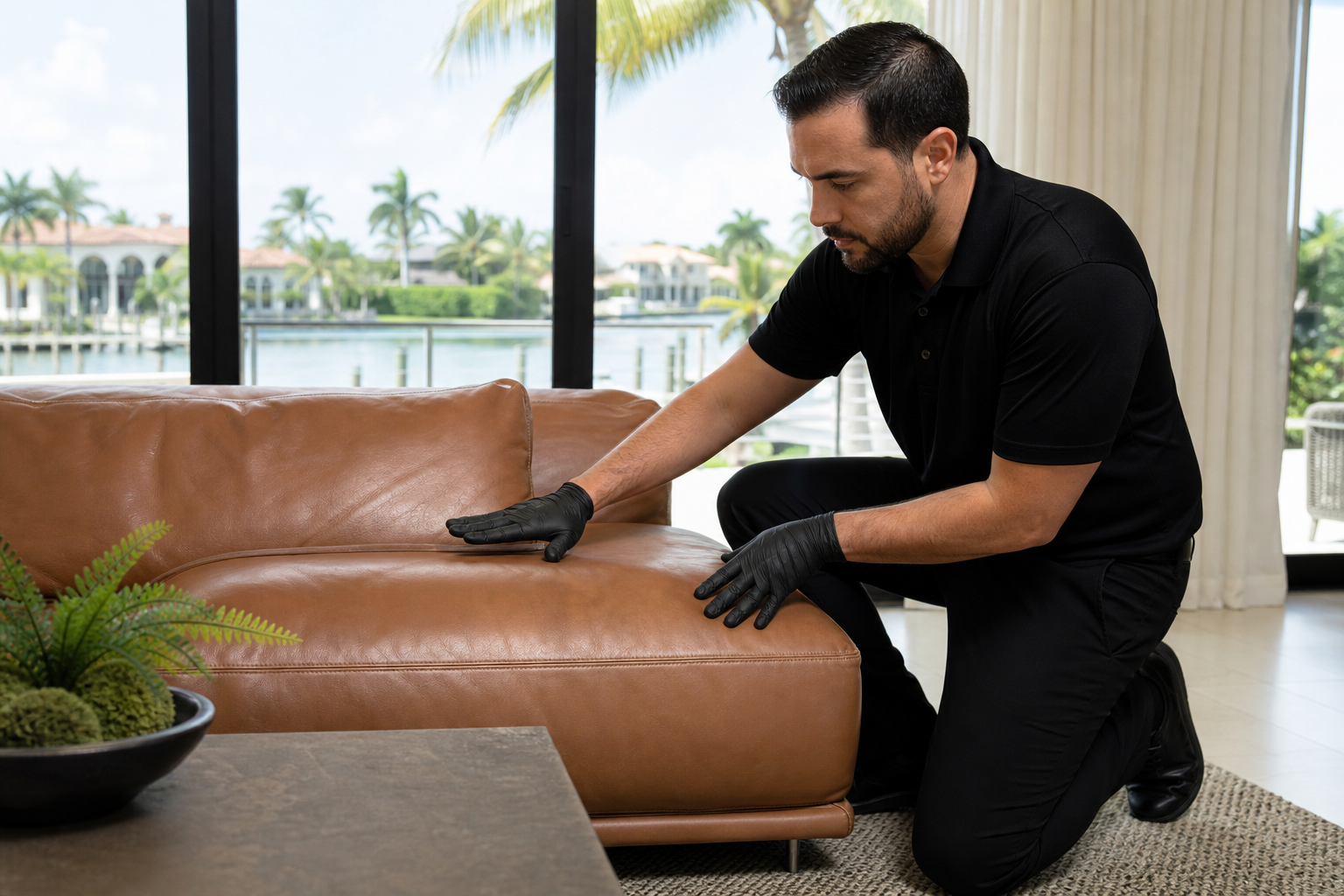
When leather is cleaned with the wrong product, the first damage often occurs on the finish—not deep in the leather itself. That protective surface layer gives many leather furnishings, vehicle interiors, boats, aircraft seats, and commercial seating their color, sheen, and resistance to everyday moisture and soil.
Once the finish is weakened, the leather underneath becomes more vulnerable to staining, drying, color loss, abrasion, and uneven wear. In Southwest Florida, heat, intense sunlight, humidity, sunscreen, body oils, saltwater residue, and seasonal-home conditions can make the problem progress more quickly.
Understanding how cleaners affect the finish can help you avoid an expensive mistake and recognize when professional leather cleaning or restoration is the safer choice.
What Is the Leather Finish?
The finish is the treated surface layer applied to or developed on leather after tanning and coloring. Depending on the leather type, it may include pigments, dyes, protective coatings, resins, waxes, or other materials designed to create a specific appearance and level of protection.
On finished or protected leather, the surface helps control how moisture, oils, dirt, and cleaning products interact with the hide. It also influences whether the leather looks matte, satin, glossy, distressed, or naturally textured.
When people say a leather cleaner “damaged the leather,” they may actually be seeing damage to this surface layer. That distinction matters because finish damage can sometimes be corrected, while cleaning aggressively can create deeper or more complicated problems.
Why the Finish Can Be Damaged Before the Leather
The finish is the part of the material that comes into direct contact with a cleaner. A product does not need to penetrate deeply to cause visible changes. It may soften, dissolve, strip, discolor, or leave a residue on the finish during the first application.
Strong solvents can soften or strip surface coatings
Some household products contain solvents or degreasers designed for glass, plastic, countertops, appliances, or other hard surfaces. These ingredients may cut through oils effectively, but leather finishes are not designed to tolerate every solvent.
A cleaner that appears to remove dirt quickly may also remove part of the protective surface. The result can be a dull patch, a sticky area, color transfer, cracking, or a visible difference between the cleaned section and the surrounding leather.
Alkaline products may alter the finish
Leather is not simply a washable fabric. Products with a high or low pH can affect the chemistry of the finish and the materials beneath it. Repeated exposure may leave the surface dry, brittle, tacky, cloudy, or uneven.
Even when a product is marketed as a general-purpose cleaner, that does not mean it is appropriate for finished leather. The surface may look acceptable immediately after cleaning and then show changes as it dries.
Abrasives can create permanent-looking wear
Scrubbing powders, rough sponges, magic erasers, stiff brushes, and abrasive cloths can remove more than the stain. They may scuff the finish, flatten the texture, or create a lighter area that resembles fading.
Pressure is also important. Repeated rubbing in one small area can create a polished or shiny spot, especially on dark leather, automotive seats, armrests, and frequently used furniture.
Oils and waxes can leave a misleading appearance
Oil-based products may make leather appear darker or shinier for a short time. However, they can leave residue that attracts dust and changes the way the finish reflects light. Some products may also interfere with later cleaning, conditioning, recoloring, or repair work.
For more detail about this common mistake, read Are Oil-Based Household Cleaners Safe for Leather?
Common Products That Can Harm a Leather Finish
The risk depends on the leather type, finish, product ingredients, concentration, contact time, and application method. The following products deserve particular caution:
- All-purpose household cleaners
- Glass and window cleaners
- Disinfecting sprays and wipes
- Alcohol-based products
- Degreasers intended for kitchens or engines
- Bleach or chlorine-based products
- Ammonia-containing cleaners
- Vinegar mixtures and other improvised solutions
- Baby wipes or facial cleansing wipes
- Furniture polish, petroleum-based products, and silicone-heavy dressings
- Abrasive pads, melamine sponges, and rough brushes
Some of these products may be appropriate for a different surface, but suitability for glass, vinyl, plastic, or sealed stone does not make them safe for leather. Baby wipes are another frequent source of residue and finish changes; they are not formulated as leather cleaners. See Why Baby Wipes Aren’t Leather Cleaners for a closer look.
Signs the Finish Has Been Affected
Finish damage can appear immediately or develop after the surface dries. Watch for changes such as:
- A sticky, tacky, or gummy feel
- A cloudy, hazy, or milky appearance
- Unexpected gloss or a polished-looking patch
- Color transfer onto the cloth
- A lighter or darker area after cleaning
- Peeling, flaking, bubbling, or cracking
- New stiffness or a dry, papery feel
- Water spots or uneven darkening
- A strong chemical odor that does not dissipate
- More rapid absorption of moisture or oils
Not every change means the leather is permanently ruined. Some problems are residue-related and may be corrected with appropriate cleaning. Others involve finish loss, pigment disruption, or chemical damage that requires repair or color restoration.
Why Rubbing Harder Usually Makes the Problem Worse
When a stain does not disappear, it is tempting to apply more product or increase pressure. That approach can turn a localized stain into a larger finish problem.
Rubbing can spread oils, drive contamination into texture, remove pigment, and create friction marks. It can also make the cleaned area look different from the rest of the panel. This is particularly noticeable on automotive seats, light-colored sofas, marine seating, and leather with a low-sheen finish.
Cleaning should remove soil without unnecessarily changing the surface. The goal is controlled soil removal, not maximum agitation.
Leather Types Need Different Cleaning Approaches
One of the most important reasons to avoid experimenting with household products is that “leather” describes many different materials.
| Leather or material type | Why the approach matters |
|---|---|
| Finished or protected leather | Usually has a surface coating, but that coating can still be dulled, stripped, or damaged by unsuitable products. |
| Aniline leather | Has little or no protective pigment coating and can absorb liquids and oils readily. |
| Semi-aniline leather | Has some protection but remains more sensitive to moisture and aggressive cleaning than heavily finished leather. |
| Nubuck or suede | Has a napped surface that can be flattened, stained, or permanently altered by liquids and rubbing. |
| Automotive, marine, and aviation leather | May have specialized finishes and face conditions such as UV exposure, salt, sunscreen, frequent contact, or enclosed heat. |
If you are unsure of the leather type, product labels alone may not provide enough information. A professional can evaluate the surface, identify visible finish conditions, and determine whether cleaning, conditioning, protection, repair, or recoloring is appropriate.
What to Do If You Used the Wrong Cleaner
- Stop applying the product. Do not continue testing it on additional areas.
- Blot rather than scrub. If the surface is still wet, use a clean, soft, absorbent cloth to remove excess moisture.
- Do not layer on another product. Adding oil, conditioner, polish, or a second cleaner may complicate the residue and make assessment more difficult.
- Allow the area to dry naturally. Avoid hair dryers, heaters, direct sun, and other concentrated heat sources.
- Document what happened. Note the product used, how long it remained on the leather, and whether the surface changed immediately or after drying.
- Request an evaluation if the appearance or texture has changed. Early professional assessment may help prevent unnecessary additional damage.
Do not try to remove peeling finish, scrape off residue, or recolor the area with a consumer dye kit before the surface has been evaluated. A well-intended repair can make later restoration more difficult.
Southwest Florida Conditions Increase the Need for Careful Cleaning
Leather in Fort Myers, Cape Coral, Naples, Bonita Springs, Estero, Marco Island, Sanibel, Captiva, Port Charlotte, Punta Gorda, Lehigh Acres, and nearby communities may be exposed to conditions that place extra stress on the finish.
- Heat and humidity: Warm, humid conditions can make residue feel sticky and may encourage contamination to remain on the surface.
- UV exposure: Sunlight can fade color and weaken finishes, especially near windows, in convertibles, boats, and aircraft.
- Sunscreen and body oils: These can accumulate on headrests, armrests, steering wheels, seat bolsters, and furniture contact areas.
- Saltwater and sand: Marine environments can introduce salt residue and abrasive particles that increase wear.
- Seasonal homes: Closed-up properties may develop odors, humidity-related contamination, or mold and mildew concerns.
For seasonal or coastal properties, cleaning should be paired with an appropriate maintenance plan rather than occasional aggressive treatment. If mold or mildew is present, use a specialized approach; household cleaners may spread the problem or affect the finish. See Mold and Mildew on Leather: Causes, Safe Cleaning, and Prevention in Southwest Florida.
How Professional Leather Cleaning Protects the Finish
Professional cleaning begins with evaluating the leather, finish, color, texture, contamination, and condition of the surface. The cleaning method should be selected for that specific material rather than treating every item the same way.
A careful service may include controlled testing in an inconspicuous area, appropriate soil removal, attention to high-contact zones, residue management, and recommendations for conditioning or protection when needed. The objective is to improve cleanliness while preserving the original finish as much as possible.
Professional cleaning is not the same as simply applying a stronger chemical. In many cases, the safest approach involves the right product, limited moisture, controlled agitation, and patience. Learn more about the process in What Is Actually Removed During a Professional Leather Cleaning?
Frequently Asked Questions
Can the wrong leather cleaner permanently damage the finish?
It can. Some damage may be limited to residue or temporary dullness, while other damage may involve pigment loss, peeling, cracking, or a permanent change in sheen. The outcome depends on the product, leather type, exposure time, and amount of rubbing.
Is a leather cleaner labeled “safe” automatically right for my leather?
No. A product may be suitable for one type of finished leather but inappropriate for aniline, suede, nubuck, or a specialized automotive, marine, or aviation finish. Always consider the material and test cautiously.
Can I use disinfecting wipes on a leather sofa or car seat?
Disinfecting wipes may contain ingredients that dry, discolor, or weaken a leather finish. Unless the leather manufacturer specifically approves the product for that surface, avoid using it without professional guidance.
What should I do about a sticky leather surface after cleaning?
Stop using additional products and avoid scrubbing. Blot away excess moisture if present, let the area dry naturally, and arrange an evaluation if the tackiness remains or the appearance has changed.
Can a damaged leather finish be restored?
Possibly. Restoration may involve residue removal, finish repair, recoloring, or refinishing, depending on the condition. A professional assessment is the best way to determine what can be corrected while preserving the surrounding leather.
Protect Your Leather Before a Small Mistake Becomes a Larger Repair
The safest cleaner is not necessarily the strongest one. It is the product and process that match the leather, finish, contamination, and environment. When valuable furniture, vehicle interiors, boat seating, aircraft interiors, or commercial leather are involved, an incorrect household cleaner can create more work than the original stain.
Luxury Leather provides professional leather cleaning, conditioning, protection, repair, and restoration services throughout Southwest Florida. Contact us for a free consultation to discuss the condition of your leather and the most appropriate next step.